REVIEW: “Squid Game Season 1”—Marbles, Murder, and Capitalism in a Tracksuit
Drama: Squid Game Season 1
Native Title: 오징어 게임 (Ojingeo Geim)
Screenwriter & Director: Hwang Dong-hyuk
Release: 2021
Episodes: 9
Original Network: Netflix
Genre: action, thriller, mystery, drama
Tags: death game, survival, poor male lead, competition, suspense, murder, death, debt, friends to enemies
Where to watch:

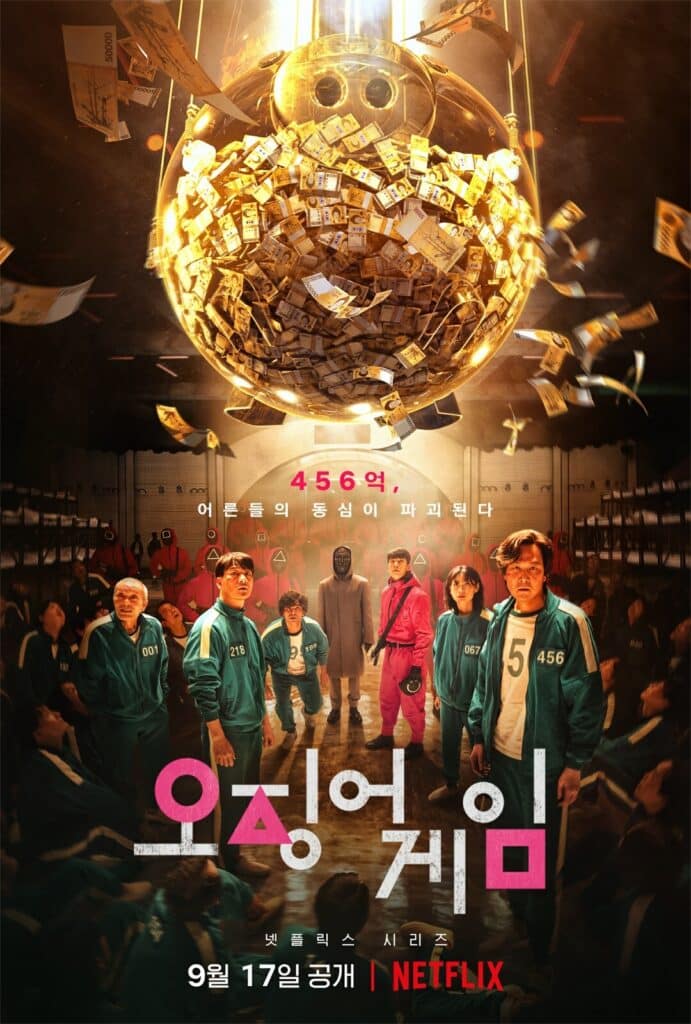
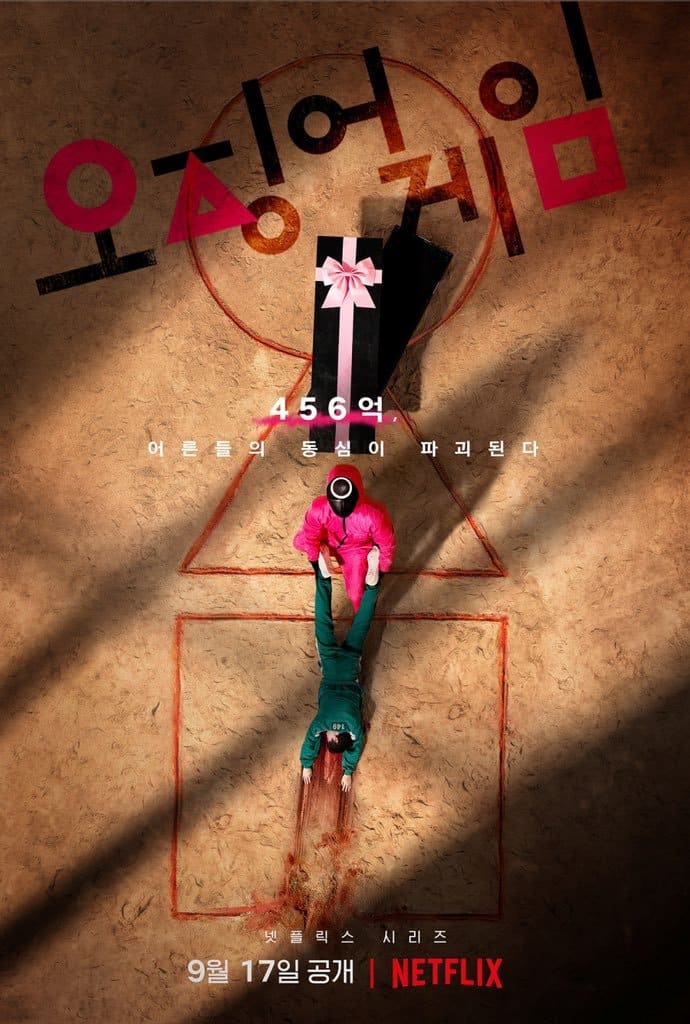
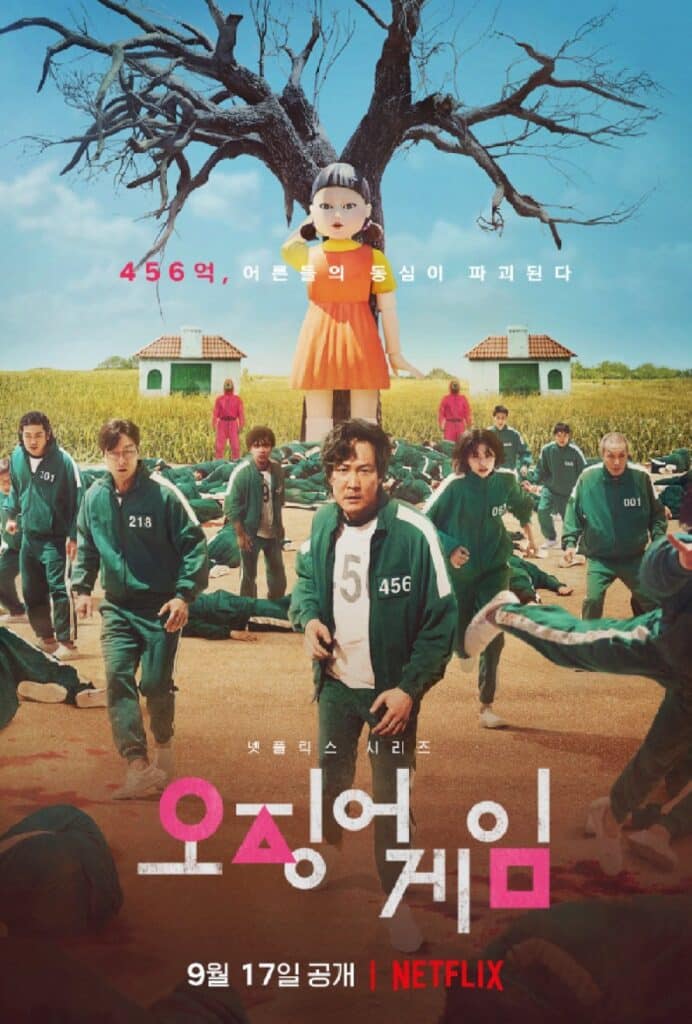
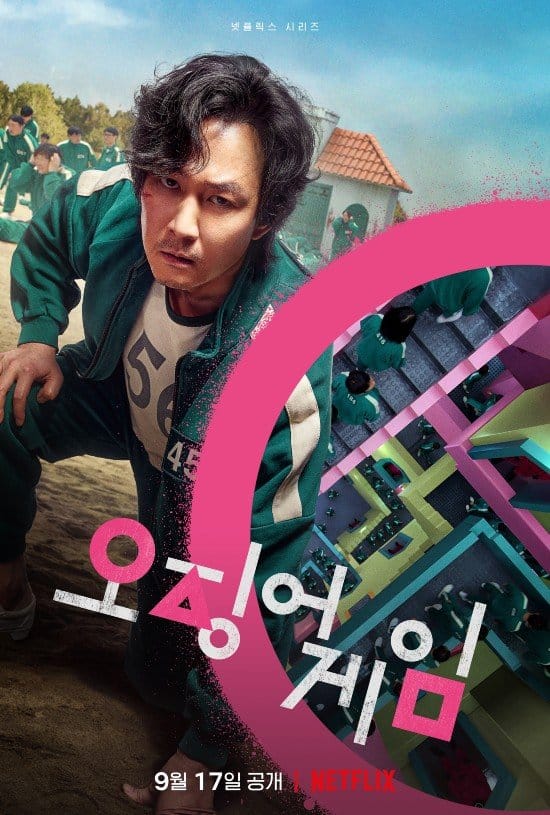

Cast
Main Role

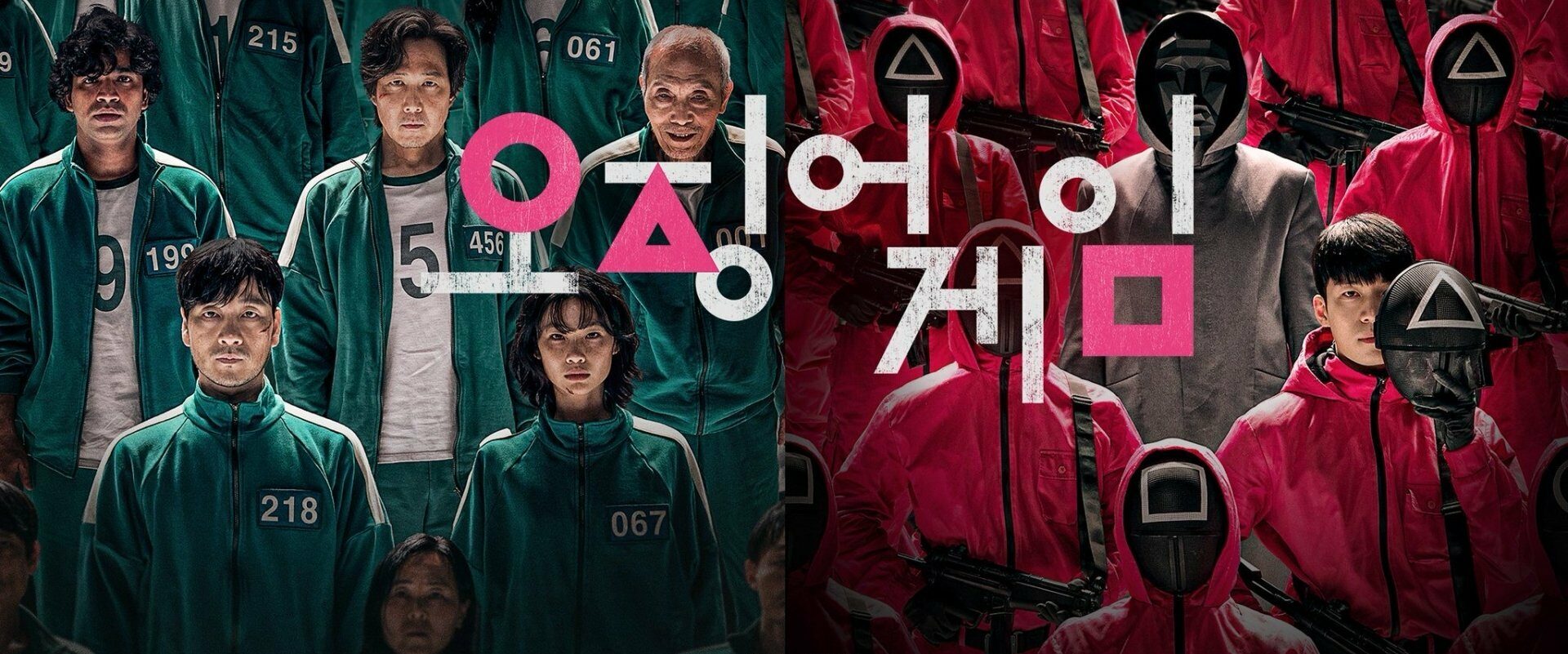
Lee Jung-jae as Seong Gi-hun / “No. 456”

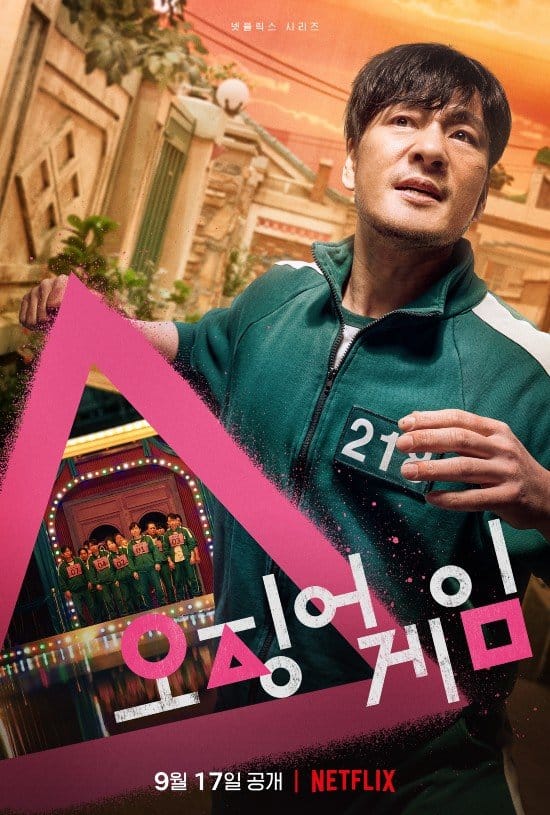
Park Hae-soo as Cho Sang-u / “No. 218”

Jung Ho-yeon as Kang Sae-byeok / “No. 067”

Wi Ha-joon as Hwang Jun-ho
Support Role

as O Il-nam / “No. 001”



as Han Mi-nyeo / “No. 212”

as Ji-yeong / “No. 240”

🦑 Introduction: Let the Game Begin… and No One Was Ready
Remember when someone casually told you, “Hey, there’s this Korean show where people play childhood games… and if they lose, they die”?
And you were like, “Wait, what? That sounds insane.”
But then you watched one episode… and suddenly it was 2 a.m., your jaw was on the floor, and you were emotionally invested in people fighting to the death over marbles.
That was Squid Game — a series that seemed to come out of nowhere and ambushed pop culture like a slap to the face from a red envelope. Within days, it was everywhere: memes, Halloween costumes, TikTok trends, college lectures, political think pieces. What started as a twisted survival game quickly turned into a global reckoning about money, morality, and how far people will go when they’re pushed to the edge.
It became Netflix’s biggest hit ever. It sparked fashion trends (who knew green tracksuits and pink jumpsuits could be this menacing?) and had us all asking uncomfortable questions like: Would I survive a giant robot girl with motion sensors?
(Spoiler: No. No, you would not.)
In this review, we’re diving headfirst into Season 1 — the chaos, the characters, the heartbreaks, the betrayals, and the eerie feeling that maybe, just maybe, we’re all already playing some version of this game.
This isn’t just a show.
It’s a wake-up call disguised as a playground.
So grab your player number and don’t step on any glass tiles — this is going to be fun… until it isn’t.
🎲 Premise & Structure: Red Light, Existential Crisis
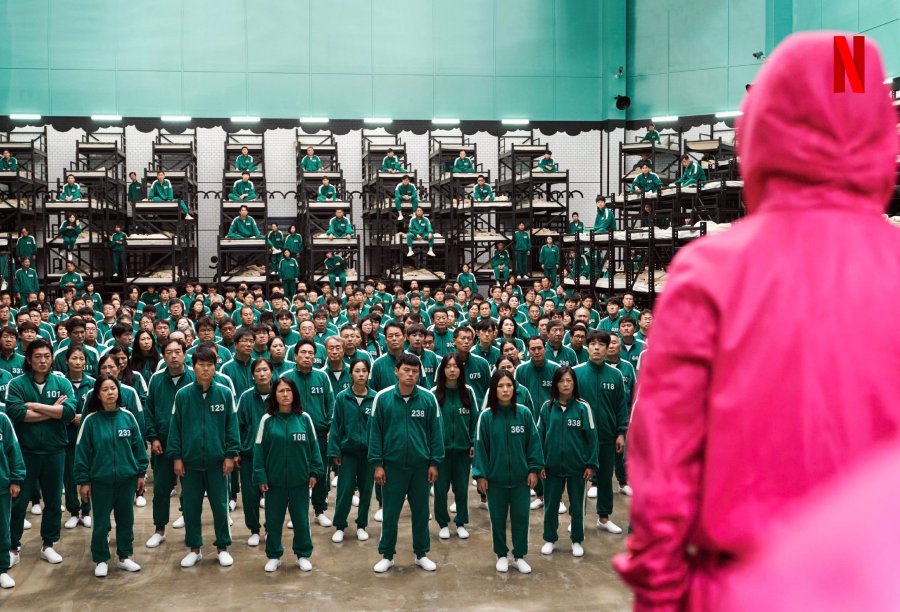
The setup is deceptively simple: 456 broke, desperate contestants agree to compete in a series of childhood games for a life-changing cash prize. Win, and you move on. Lose… and you’re promptly eliminated.
(And no, not in the fun game-show way. We’re talking blood-splatter-on-the-walls kind of elimination.)
The prize? A cool ₩45.6 billion — that’s about $38 million, or just enough to almost afford an apartment in Seoul. Actually, scratch that — you could buy dozens of apartments. That kind of money equals over 1,000 years of average Korean salary, making it less of a life upgrade and more of a complete system escape.
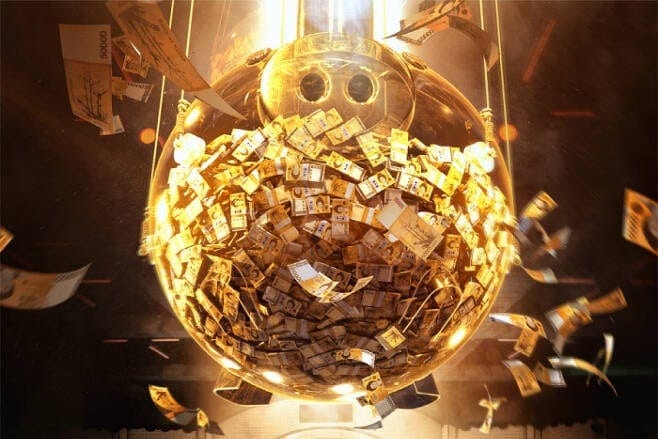
The catch? Every time someone dies, more money drops into a giant glass piggy bank suspended above the players’ sleeping quarters like a capitalist chandelier of doom.
Each episode unfolds like a warped school field day designed by a psychopath:
- Red Light, Green Light introduces the rules (and a giant murder doll).
- Dalgona Candy turns a childhood treat into a test of precision and panic sweat.
- Tug of War becomes a literal fight for survival, complete with a strategy speech that deserves its own TED Talk.
- And Marbles… well, if you didn’t cry during Marbles, you might actually be one of the VIPs.
The genius lies in the structure: each game is simple enough that viewers instantly understand the rules — but the real complexity is psychological. Alliances form, trust erodes, and the true game isn’t winning the round… it’s keeping your humanity intact while everyone else is losing theirs.
It’s The Hunger Games if the contestants were broke, middle-aged, and emotionally destroyed before round one.
🎭 Characters & Performances: The Good, the Bad, and the Emotionally Shattered
One of the things Squid Game absolutely nails is giving you just enough character depth to fall in love with someone… right before the show emotionally wrecks you by killing them off in the most soul-crushing way possible. Yay, feelings!
Let’s meet a few of the players we grew tragically attached to:
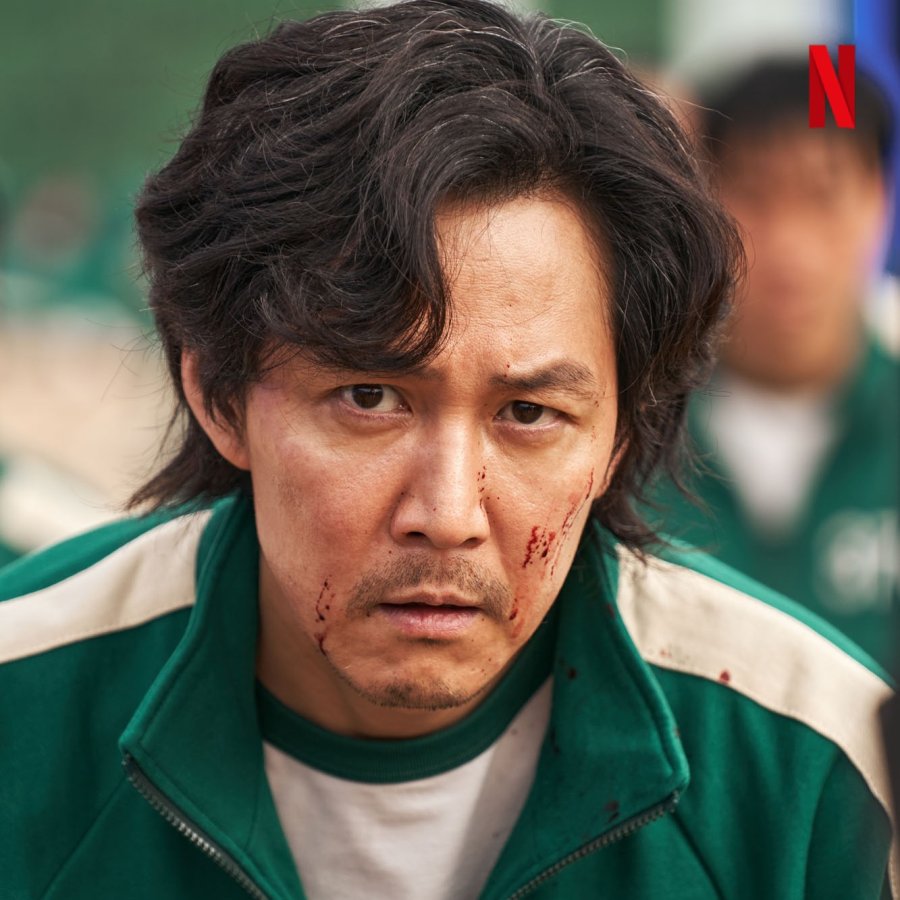
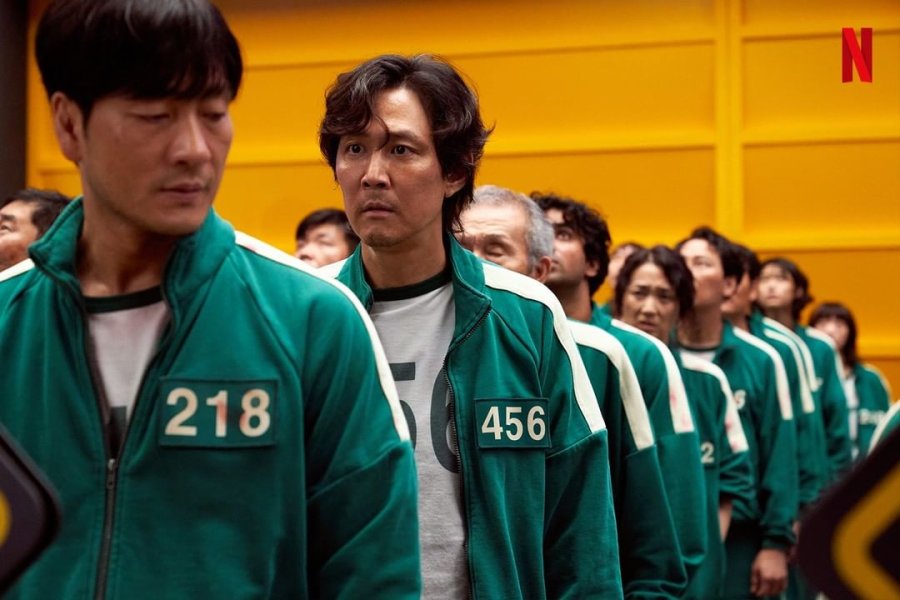
Seong Gi-hun (Player 456) – The Deadbeat with a Heart of Gold
Played by Lee Jung-jae (who rightfully won an Emmy for this role), Gi-hun starts off as the kind of guy you wouldn’t trust to feed your cat — broke, divorced, addicted to horse betting — and yet, somehow, you root for him.
He’s the emotional core of the show: clumsy, bleeding empathy, constantly making choices that are either heartwarming or deeply frustrating. You’ll yell at your screen, then immediately feel bad about it.
Cho Sang-woo (218) – The Tragic Brainiac Turned Snake
Every good story needs a character whose moral compass falls off a cliff, and Sang-woo delivers. Once a math prodigy, now wanted for financial crimes, he starts off calculating and ends up calculating… murder.
His descent from “reliable childhood friend” to “dude who would 100% push you off a glass bridge” is painfully believable. You hate him. You get him. You hate that you get him.
Kang Sae-byeok (067) – The Quiet Storm with a Knife
A North Korean defector trying to reunite her family, Sae-byeok is equal parts steel and silence. Jung Ho-yeon, in her acting debut (!!), manages to say more with a single eye-roll than most actors do with a monologue.
She doesn’t trust easily. She doesn’t cry easily. And when she does, it guts you. If the internet had voting power, she’d have won the whole thing and taken the piggy bank home to her little brother.
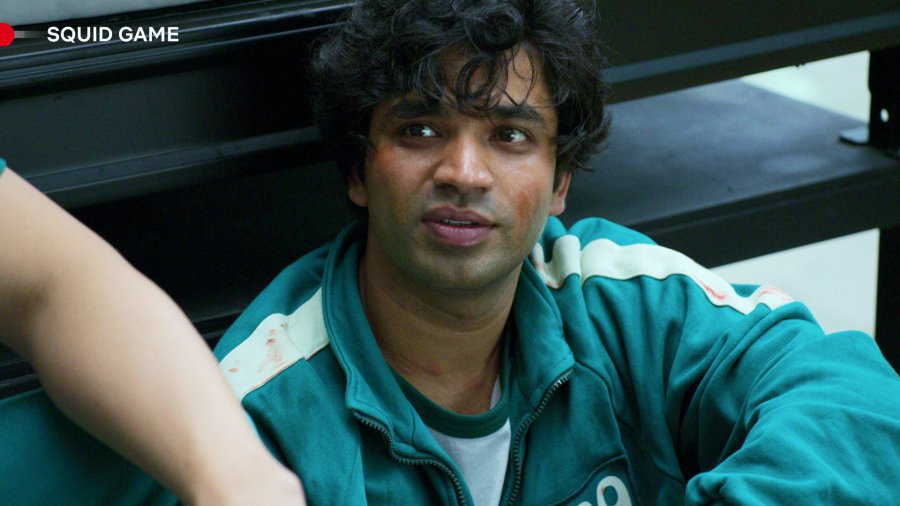
Ali Abdul (199) – The Cinnamon Roll in a Death Match
Ali is sunshine. A kind-hearted migrant worker just trying to support his family, he represents trust, loyalty, and all the good things we usually reward in storytelling…
Except Squid Game doesn’t play by those rules.
What happens to him in the marbles episode? That wasn’t just betrayal. That was a war crime against viewer emotions. I still haven’t forgiven the writers. And I don’t think I ever will.
Oh Il-nam (001) – The Sweet Grandpa… Until He Isn’t
The old man with the brain tumor who just wants to feel alive again. Charming, gentle, weirdly good at marbles — and then boom: plot twist heard around the world.
Let’s just say the final reveal retroactively ruins every warm moment you had with him.
You’ll never trust a giggling old man in a tracksuit again.
And Then There’s Hwang Jun-ho – The Detective Who Stole Every Scene He Wasn’t Supposed to Be In
While the players fought for their lives inside the game, Wi Ha-joon’s Hwang Jun-ho gave us a very different kind of tension — the slow-burning, nerve-shredding, “don’t get caught in the hallway” kind.
As the lone undercover cop sneaking through the shadows, he offered us our only real glimpse behind the curtain: how the guards operated, how the VIPs were entertained, and just how deep this sick system ran.
He wasn’t just trying to expose the game — he was trying to find his missing brother. So of course Squid Game twisted the knife and made his brother the Front Man. Classic.
His final scene was a gut punch wrapped in a cliffhanger, and even though he didn’t wear a player number, he still played the same rigged game — just on a different level.
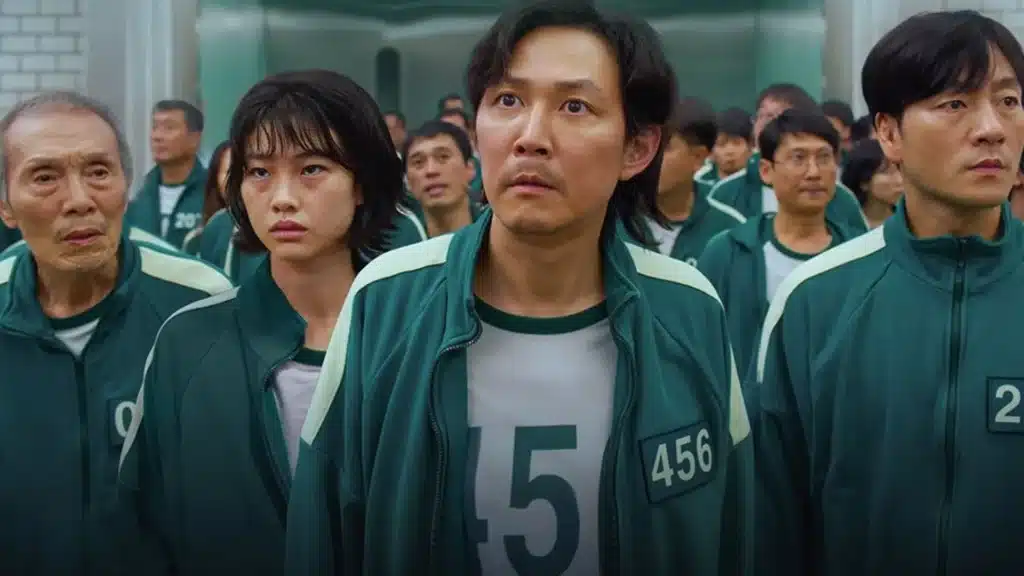
Together, this cast gives the show its emotional weight. They’re not just pawns in a brutal game — they’re reflections of the broken world outside of it. And every single actor brings it. No phoning it in. Not even the robot doll.

💸 Themes & Social Commentary: Capitalism, Trauma, and the Price of Instant Noodles
You could watch Squid Game just for the thrills — the suspense, the games, the explosions of bright red blood on pastel playground sets. But under the surface-level chaos is a sharp, angry message aimed squarely at… well, everything. And it hits hard.
Late-Stage Capitalism, Now with Murder
Let’s be honest: Squid Game isn’t exactly subtle. The show screams, “Hey, the world is broken!”, then backs it up with 456 examples of how society chews people up and spits them out — usually in debt, alone, and clutching a ramen cup.
Every player signed up voluntarily. That’s the most disturbing part. They were so crushed by loans, medical bills, and financial despair, they thought death games were a reasonable career move.
And the fact that the piggy bank gets fuller with each death? That’s not just dramatic flair — that’s literal blood money. It’s capitalism gamified to its cruelest, most literal endpoint.
The Myth of Fairness
The games are sold to the players as “equal opportunity.” Same rules, same chances. But just like real life, equality on paper doesn’t mean equality in practice.
Some players are stronger. Some are smarter. Some — cough, Sang-woo — are willing to pretend they didn’t understand the rules if it gives them an edge in the honeycomb challenge.
Fair doesn’t exist in Squid Game. And the show’s message is: it doesn’t really exist out here, either.
Trust and Betrayal (a.k.a. Why We Can’t Have Nice Things)
Remember the marbles episode? Of course you do. You’re still emotionally damaged from it. That’s the moment the show looks you in the eyes and says, “Oh, you thought this was about strategy? It’s about betrayal now.”
Friendship, loyalty, self-sacrifice — all of it gets tested. Some characters pass. Others… well, others leave you yelling, “HOW COULD YOU DO THAT TO ALI?!”
It’s a brutal reminder that under pressure, even good people can make horrific choices. (Especially when ₩45.6 billion is on the line.)
The Spectacle of Suffering
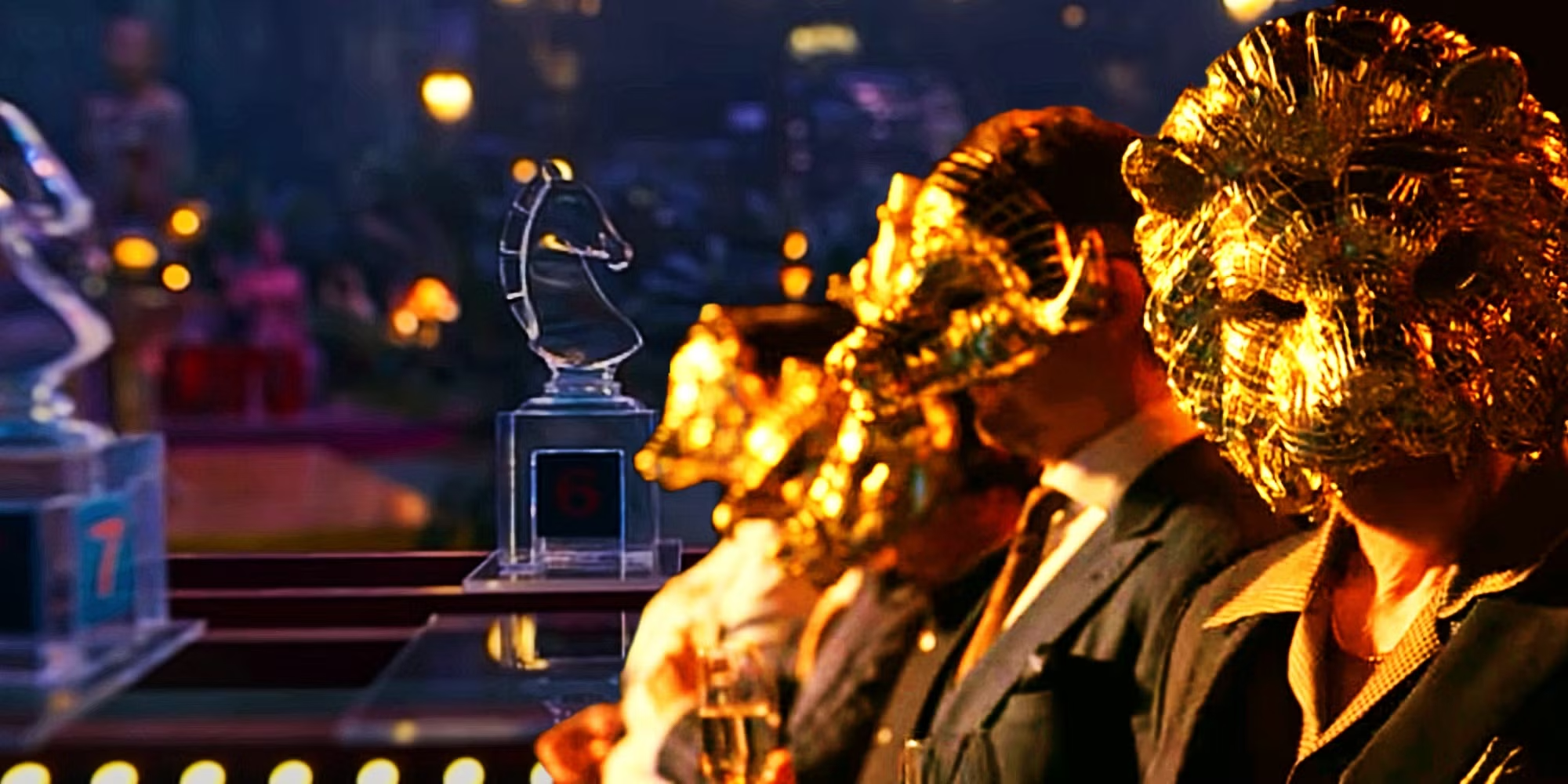
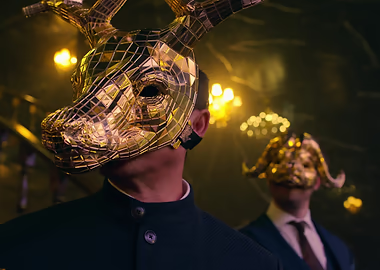
And let’s not forget the VIPs — those rich creeps in golden animal masks who watch the carnage while sipping whiskey and making cringey jokes in questionable English.
They’re not just comic relief. They represent something very real: how the ultra-wealthy treat human suffering as entertainment, distant and impersonal.
Squid Game doesn’t give you answers. It doesn’t offer hope. But it does hold up a mirror — and what it reflects is uncomfortably familiar.

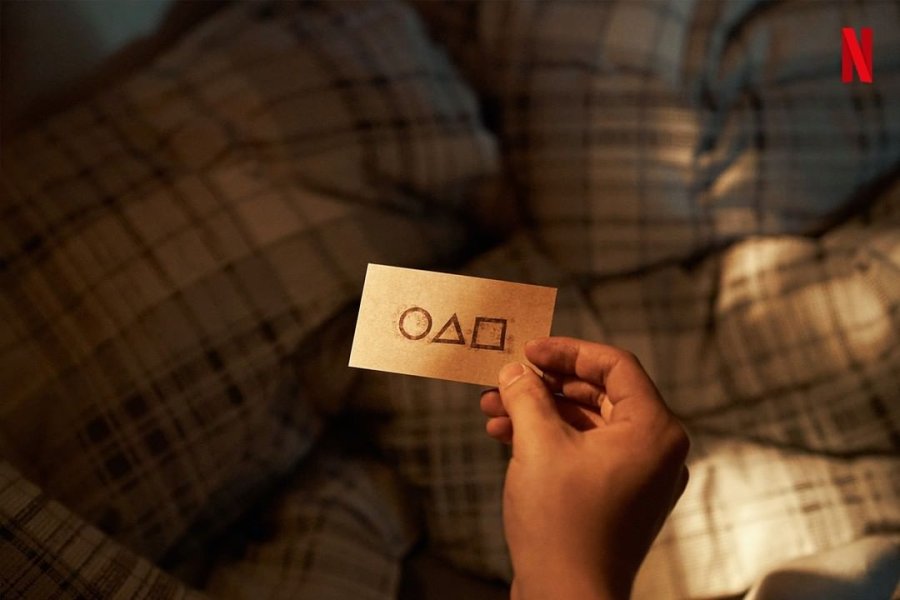
🎨 Visual Style & Symbolism: Aesthetic Nightmare Fuel
You ever watch a show and think, “Wow, this is gorgeous — I wish it didn’t make me feel like I’m going to die”?
Yeah. That’s Squid Game in a nutshell.
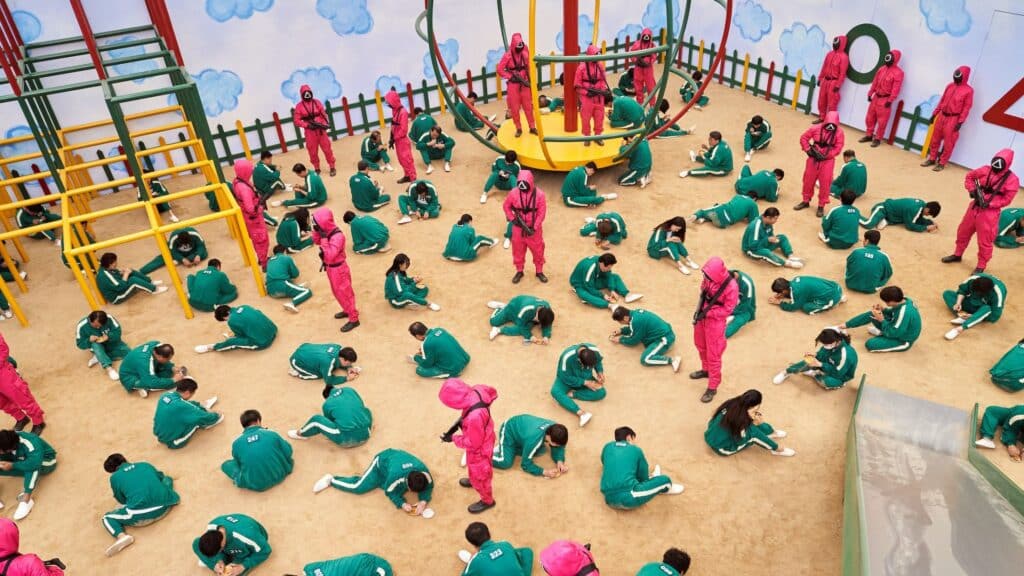
From the very first shot, the series makes one thing clear: this isn’t your typical dystopia. It’s brighter, weirder, and way more pastel. The result? A show that looks like a candy-colored dream — until someone’s face gets blown off.
Escher Stairs & Capitalist Mazes
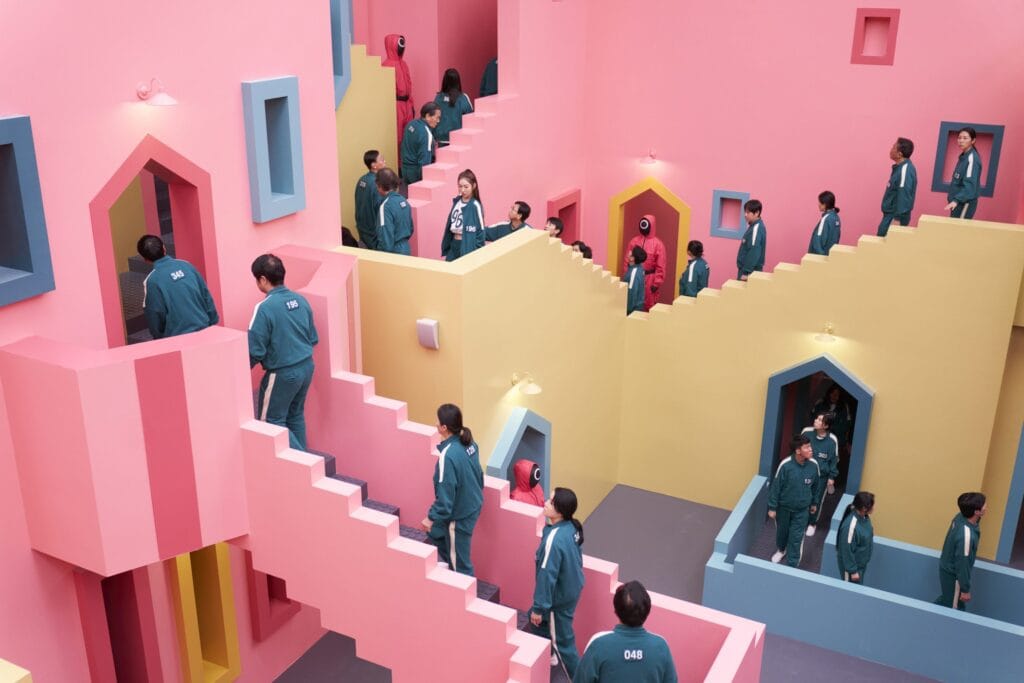
The iconic staircase set, inspired by M.C. Escher’s Relativity, is basically what happens when IKEA builds a nightmare. Bright pinks and baby blues guide players to each game, but there’s no map, no direction, and no escape — just an endless loop of anxiety and Instagrammable dread.
It’s symbolism 101: capitalism is a maze, and no one knows who’s really in control.
Also, those poor guards must burn like 5,000 calories a day just walking up and down those stairs.
Color Coding for the Damned
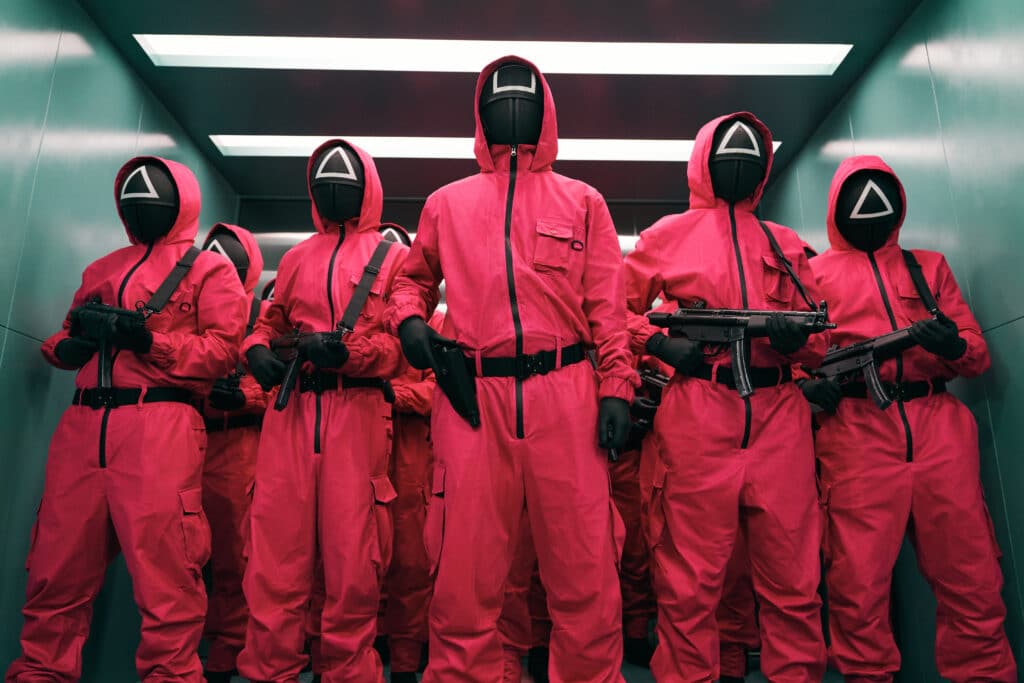
Everything is color-coded like an evil board game:
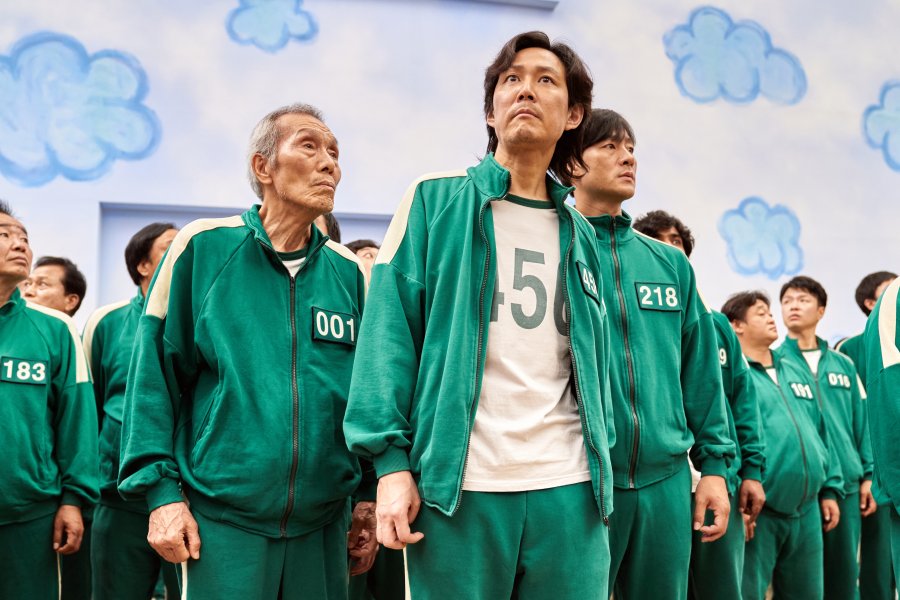
- Green tracksuits for the players — ordinary, replaceable, vaguely tragic.
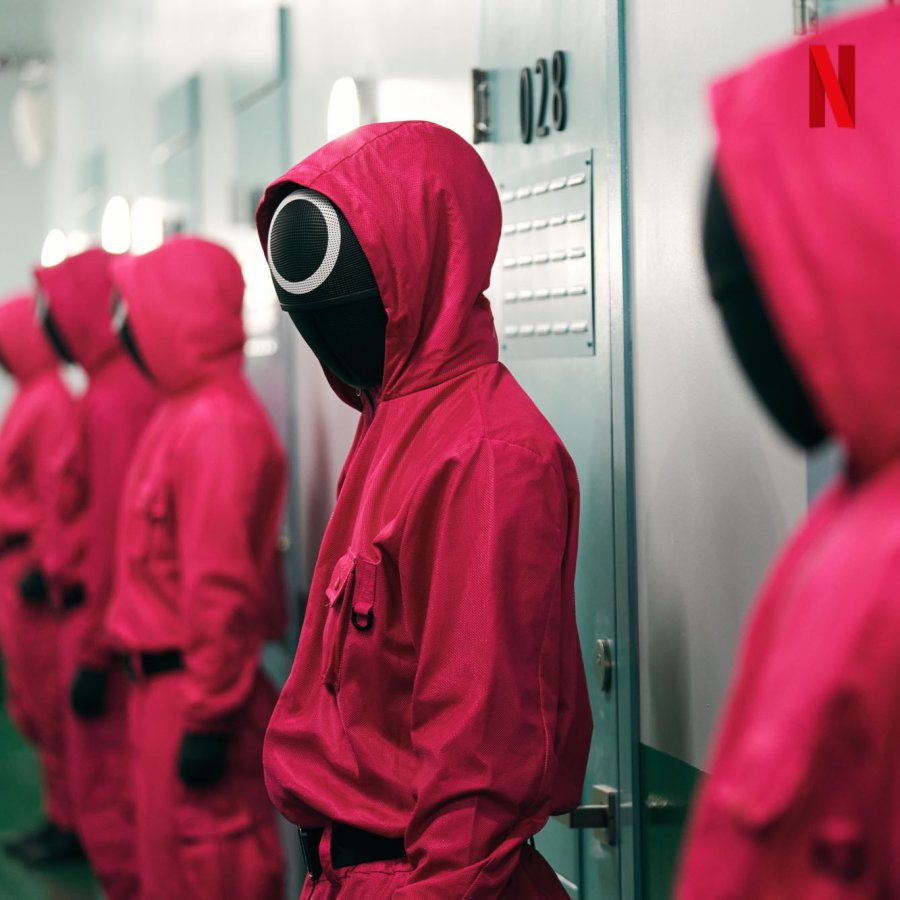
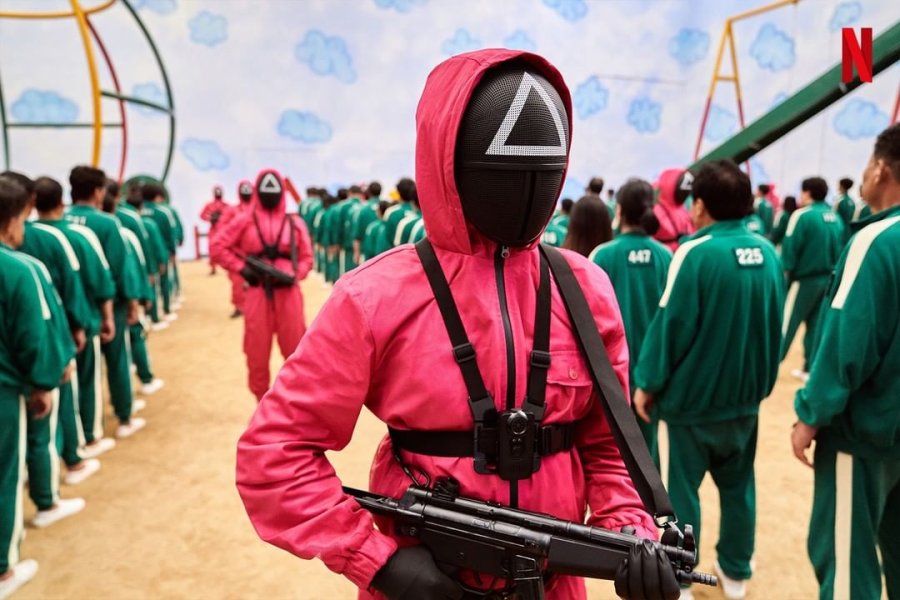
- Pink jumpsuits for the guards — faceless, robotic, armed with SMGs and weird shapes on their masks.
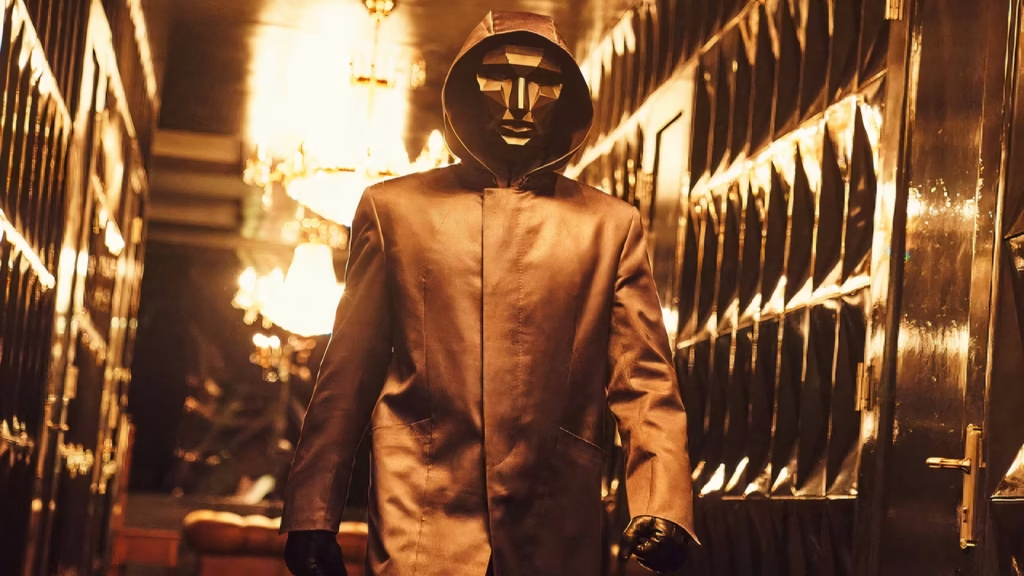
- Black mask for the Front Man — because no dystopia is complete without a boss fight in leather.
Even the games use playful colors to lull you into a false sense of nostalgia — the playgrounds look like they were designed by a preschooler with a death wish.
The Doll, the Candy, the Glass Bridge of Doom
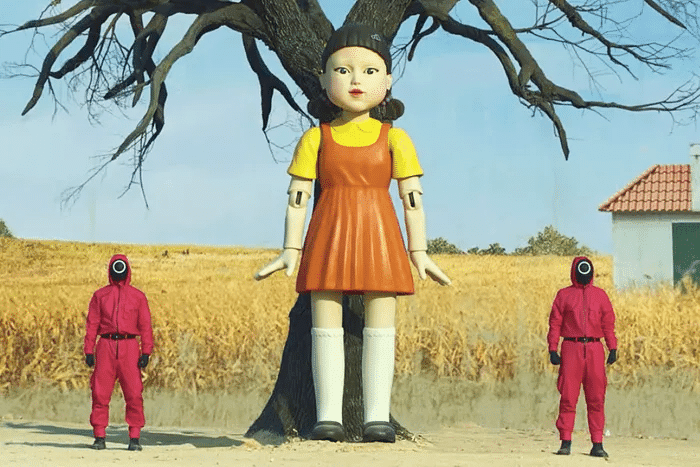
You could probably show someone three images — the Red Light, Green Light doll, a piece of dalgona candy, and the glass bridge — and they’d instantly know what show you’re talking about. That’s how iconic the visual storytelling is.
- The doll? Terrifying. Zero notes. I still flinch when I hear “mugunghwa kkochi pieotseumnida.”
- The dalgona game? A masterclass in turning childhood joy into panic sweat.
- The glass bridge? Stylish, terrifying, and definitely a metaphor for trusting your friends while walking on literal capitalism.
Oh, and That Piggy Bank
Let’s not forget the giant transparent piggy bank filled with cash that hangs above the players’ beds like a glowing god of greed.
Every time someone dies, the prize money rains down like morbid confetti. It’s beautiful. It’s awful. It’s… kind of hypnotic?
(Which, now that I say it, is basically the entire vibe of the show.)
Squid Game knows exactly what it’s doing with its visuals: lure you in with whimsy, then wreck your soul. And we loved every horrifying minute of it.

🎵 Soundtrack & Score: When the Music Haunts You Too
Let’s talk about the music. Because if you hear that creepy music-box version of “Fly Me to the Moon” or the orchestral blast that kicks in before a game… you already know what’s coming — and your fight-or-flight instinct kicks in like muscle memory.
Composer Jung Jae-il (also behind Parasite) nailed the tone: part childlike, part unnerving, and somehow always perfectly timed. The soundtrack doesn’t just support the story — it taunts you with it.
Whether it’s the chilling “Pink Soldiers” theme with its eerie choral chanting or the moment a classic piece like Haydn’s “Trumpet Concerto” blasts over the speakers as players are herded like cattle — the music becomes part of the psychological pressure. It’s unsettling, oddly beautiful, and instantly recognizable.
It’s the kind of score that follows you long after the show ends. Like… say, in your nightmares.
🎯 Key Moments & Quotes: The Scenes That Shattered Our Souls (and Went Viral)
Squid Game didn’t just give us a killer premise and great characters — it gave us moments. The kind that stick with you long after the credits roll. The kind that made you gasp, scream, or pause to stare into the existential void.
Let’s revisit a few of the ones that broke the internet (and our hearts):
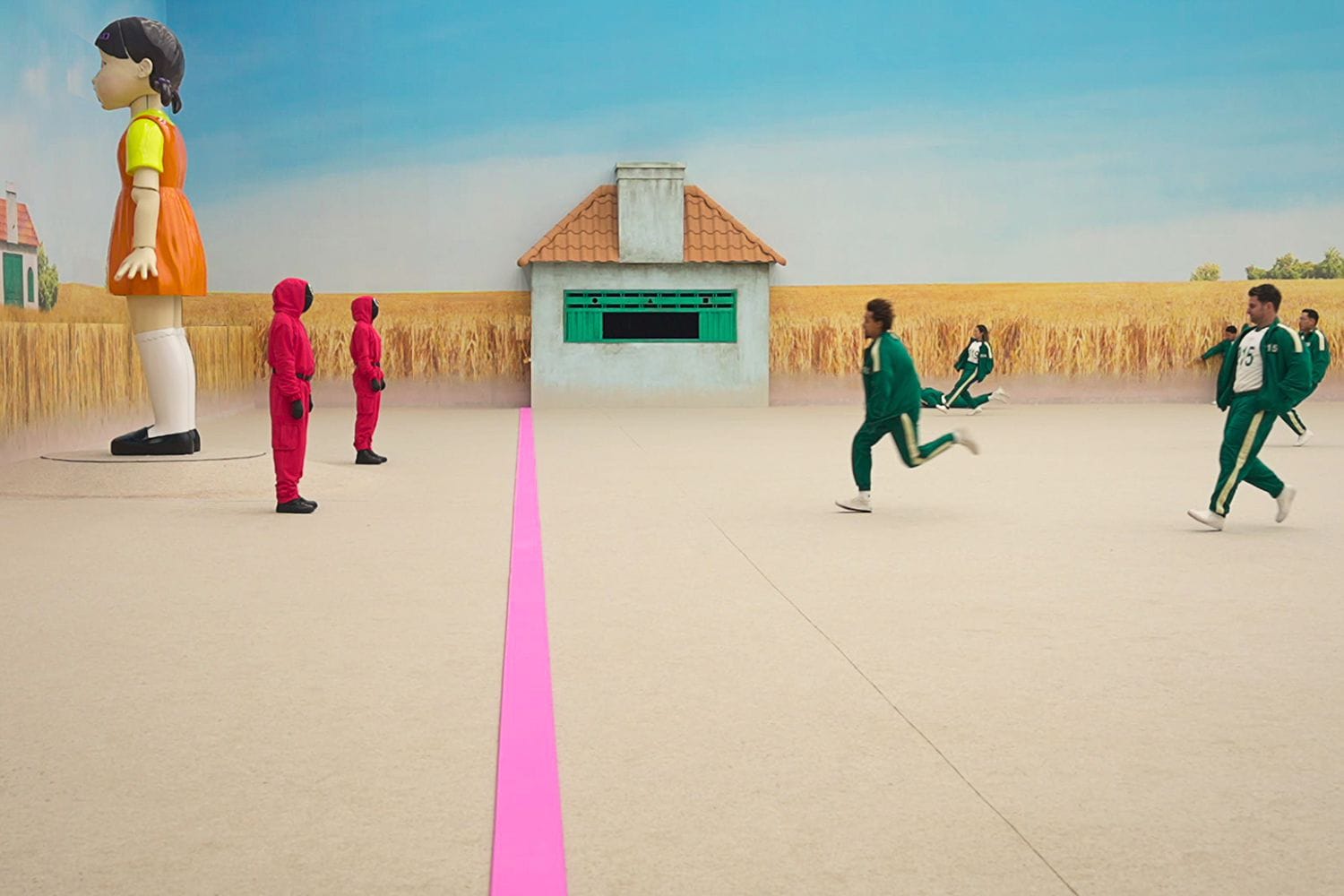
“Red Light, Green Light” — The Show Doesn’t Warm Up. It Just Opens Fire.
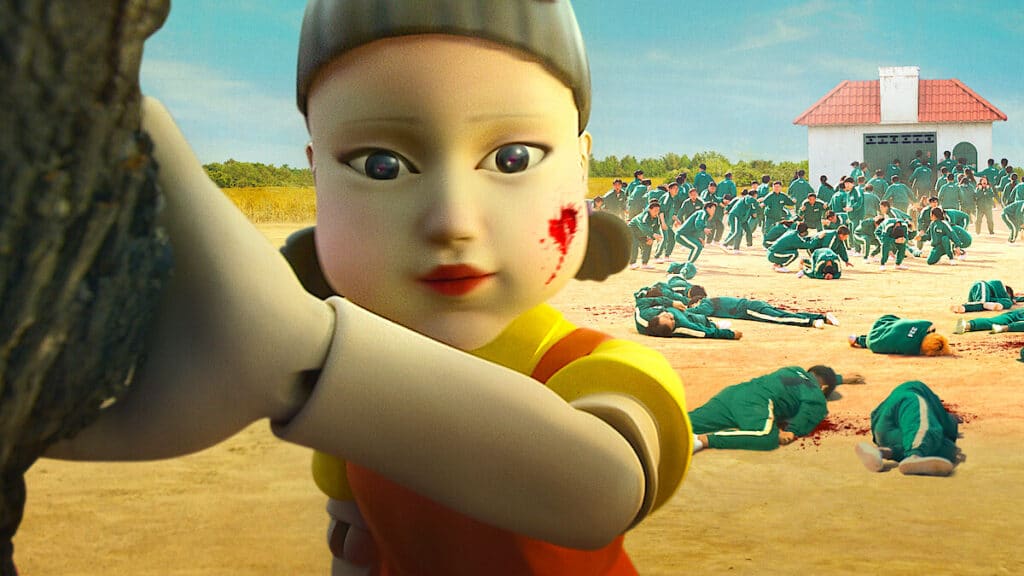
Nothing says welcome to the series like watching dozens of people get gunned down by a 10-foot murder doll with motion sensors.
This wasn’t just a game — it was a tone-setter. You thought this would be quirky and fun? Wrong. You’re watching a bloodbath wrapped in childhood nostalgia.
Also: I will never again feel safe near a playground speaker system.
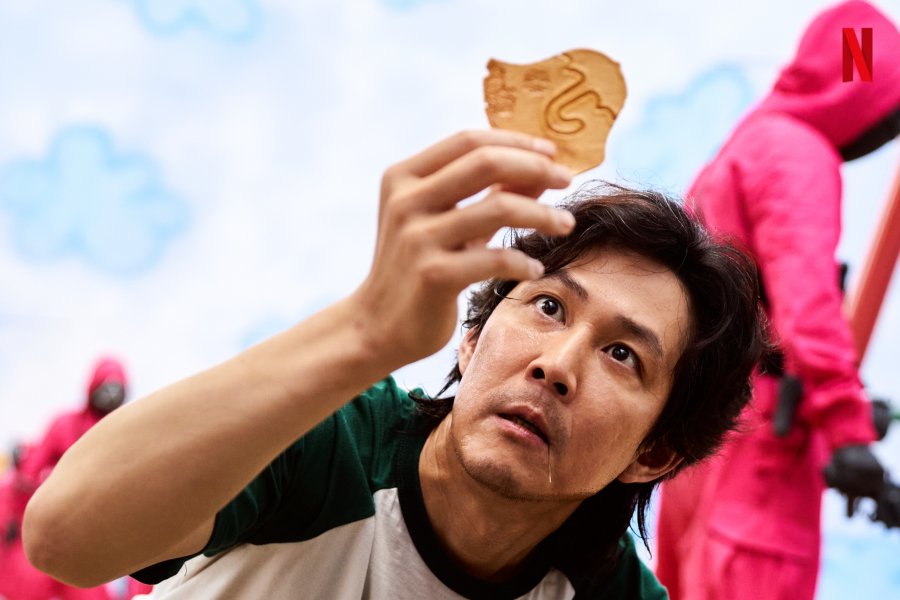
Dalgona Candy — The Most Stressful Bake-Off in History
Take a honeycomb candy. Carve out a shape using only a needle and your anxiety. Do it wrong? Die.
Gi-hun’s sweaty, desperate use of his tongue to melt the candy instantly became a meme and a metaphor: “How far will you go for survival?”
(Answer: far enough to get a cramp in your jaw and shame in your soul.)
Tug of War — Faith, Footwork, and Old-Man Wisdom
This was the moment where you realized: Oh no… I’m emotionally invested in the outcome of a literal tug-of-war.
The strategy speech from Player 001 was so good it could have been taught at Harvard. The tension? Off the charts. The payoff? Glorious.
Turns out, teamwork and trust can beat brute strength — at least when you tie yourselves to the rope and take a suicidal step forward.
Marbles — The Episode That Emotionally Crushed Humanity
This was it. The heartbreak gauntlet.
Every duo in this episode was a gut punch:
- Ali and Sang-woo – Trust meets betrayal in its most soul-destroying form.
- Sae-byeok and Ji-yeong – Two women who never had a chance, playing a game neither of them wanted to win.
- Gi-hun and Oh Il-nam – A moment of mercy… until it wasn’t.
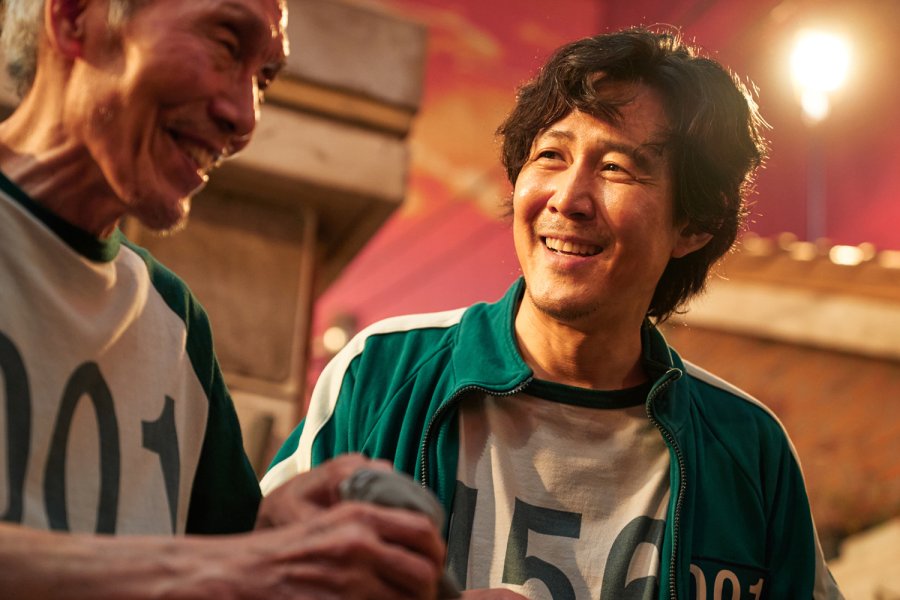

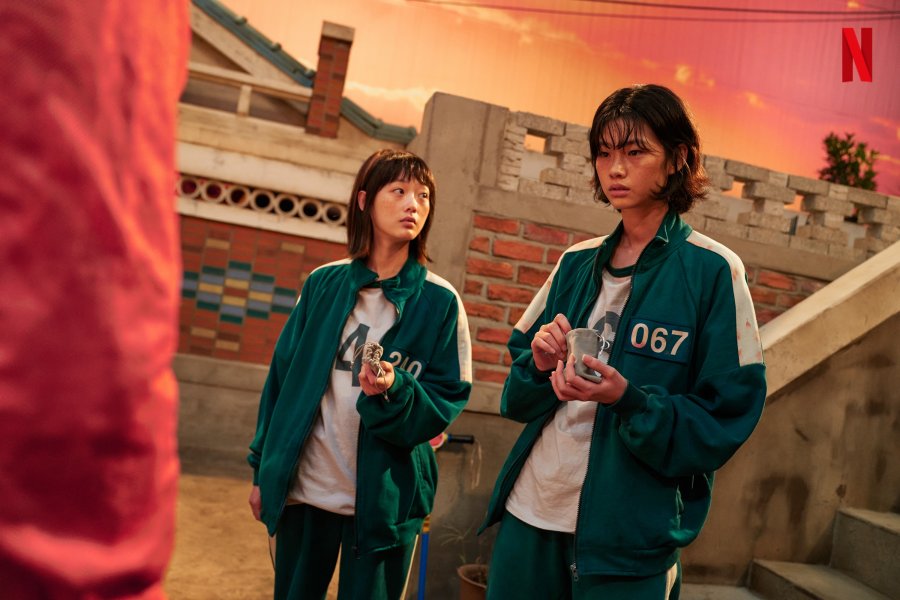
It wasn’t just sad. It was devastatingly personal. And it left the entire internet curled up in a blanket whispering, “I’m never playing marbles again.”
The Final Twist — Player 001’s True Identity
Just when you thought the show was done emotionally torturing you, it goes, “Surprise! Grandpa was the evil mastermind all along!”
Oh Il-nam’s twist was a betrayal so quietly cruel it made every warm, sweet memory you had of him feel like emotional booby traps.
Quote that still haunts us:
“Do you know what people with no money have in common with people with too much money? Living is no fun for either of them.”
Sir. Please stop. We were already crying.
Squid Game didn’t just deliver twists — it delivered emotional whiplash.
And we… we just kept watching.
🌍 Global Impact & Cultural Reception: From Netflix Hit to Worldwide Obsession
When Squid Game dropped, no one — not Netflix, not Korea, not even your drama-addicted friend who “totally saw it coming” — was ready for what happened next.
This wasn’t a TV show. It was a global event.
The Numbers Were… Unreal
Let’s talk stats:
- 1.65 billion hours watched in its first 28 days.
- #1 in 94 countries.
- Still holds the title of Netflix’s most-watched show ever.1
For context: that means the entire planet basically spent a month watching people get shot over playground games. Together. As a species. That’s… kind of beautiful?
Tracksuits, TikToks, and Trending Everything
Within days, Squid Game bled into real life:
- Sales of white Vans sneakers and green tracksuits skyrocketed 7,800%.2
- Halloween was basically one big Squid Game cosplay party.
- TikTok blew up with dalgona candy challenges, marbles reenactments, and people screaming “Red Light!” at their friends and pets.
- Even MrBeast made a real-life version. With actual prize money. (Thankfully, without actual murder.)
The aesthetic? Instantly iconic.
The robot doll? A new Halloween mascot.
The sound of “mugunghwa kkochi pieotseumnida”? Forever burned into our fight-or-flight response.
Awards and Industry Shockwaves
This wasn’t just a viral hit — it was a prestige coup.
- Lee Jung-jae became the first Asian actor to win the Emmy for Best Lead in a Drama.
- The show also nabbed a Golden Globe, a SAG Award, and global critical acclaim.
- And Netflix? They doubled down on Korean content, pledging $2.5 billion in future K-drama investment.3 Because when the internet speaks, you listen — and apparently, it speaks fluent trauma in subtitles.


Cultural Conversation Starter
What’s wild is how the show sparked not just costumes and memes, but actual discourse:
- College courses started analyzing it as commentary on capitalism.
- Economists wrote op-eds about how it reflects global debt traps.
- Even politicians referenced it — which, let’s be honest, is when you know something’s officially gone too far.
Squid Game became more than entertainment. It was a mirror, a meme, and a megaphone, all at once — and everyone, from TikTok teens to award show juries, couldn’t look away.
🧠 Narrative Strengths & Weaknesses: Tight Games, Loose VIPs
Let’s be clear — Squid Game didn’t just take over the world because it was stylish or shocking. It did that and told a story that was lean, relentless, and surprisingly emotional.
But even this near-perfect death match has a few cracks in its glass bridge.
✅ Strengths: Tension, Tears, and Perfectly Timed Chaos
- Pacing? Flawless. Every episode ends with a cliffhanger that slaps you in the face and whispers, “You weren’t going to bed, were you?”
- Game escalation? Brilliant. Each challenge is deadlier and more psychologically twisted than the last, which means by episode 6 (you know the one), you’re just emotionally raw hamburger.
- Character arcs? Devastating. In just nine episodes, the show builds full emotional journeys, complete with tragic backstories, moral unraveling, and enough tearjerkers to legally qualify as trauma bonding.
And let’s not forget: this show made marbles — actual marbles — one of the most horrifying experiences in TV history. That’s writing wizardry.
❌ Weaknesses: The VIPs and the Curious Case of the Wooden Dialogue
Ah yes. The VIPs.
If Squid Game is a fine-tuned emotional symphony, the VIP scenes are someone honking on a kazoo in the middle of a funeral.
We get it — they’re supposed to be grotesque caricatures of the ultra-rich, bored and drunk on power. But why do they talk like NPCs in a 2004 video game?
The stilted English delivery, the awkward one-liners, the “My, this game is quite exciting” energy — it’s not menacing. It’s unintentionally hilarious.
(Somewhere, a group of international voice coaches is crying into their golden whiskey glasses.)
Also: a few minor plot points (like the cop brother subplot) felt like they got pushed aside for bigger reveals. Not enough to break the story — but you might notice if you’re not distracted by someone being shot over a candy shape.
At its core, though, the narrative works because it understands tension. It knows when to hold back, when to go full chaos, and when to hit you with a twist that makes you question every warm feeling you had five minutes ago.
It’s not perfect — but it is unforgettable.
🏁 Final Verdict: Childhood Games, Adult Trauma, and a Masterclass in Mayhem
Squid Game Season 1 is what happens when you combine a brutally simple concept, sharp social commentary, addictive pacing, and just the right amount of emotional sabotage. It’s smart. It’s stylish. It’s absolutely unhinged — in the best way possible.
Yes, the VIPs sound like they wandered in from a rejected Bond film script.
Yes, some subplots (cough the detective storyline cough) quietly wandered off and never came back.
But the show’s flaws are tiny cracks in what is otherwise a pop culture monolith. A green-tracksuit-wearing, piggy-bank-exploding juggernaut of storytelling.
It made us question systems, morality, wealth, trust, and whether we’d betray our best friend for ₩45.6 billion (answer: probably, but we’d cry about it after).
It gave us visuals we’ll never forget, characters we still mourn, and a robot doll we now check the hallway for before moving.


A gripping, gut-wrenching, gloriously unsettling ride that set a new gold standard for genre TV. Not perfect — but pretty damn close.
And if you still haven’t watched it?
Well… let’s just say: you’ve got 456 reasons to fix that.

Trailer
Recommendations
- “Squid Game,” Wikipedia, https://en.wikipedia.org/wiki/Squid_Game
- “Squid Game: White Vans and Tracksuit Sales Skyrocketed 7,800%,” The Independent, https://www.independent.co.uk/life-style/fashion/news/squid-game-white-slip-on-vans-sales-b1933868.html
- “Netflix to Invest $2.5 Billion in South Korea to Make TV Shows, Movies,” Reuters, https://www.reuters.com/technology/netflix-invest-25-bln-south-korea-make-tv-shows-movies-2023-04-25/
Disclaimer: All images are owned by their respective creators. Used here under fair use for review purposes. Credits to Netflix and associated promotional partners.