REVIEW: “Our Unwritten Seoul” —A Lyrically Wounded K-Drama on Healing, Hope, Growth, and Twinhood
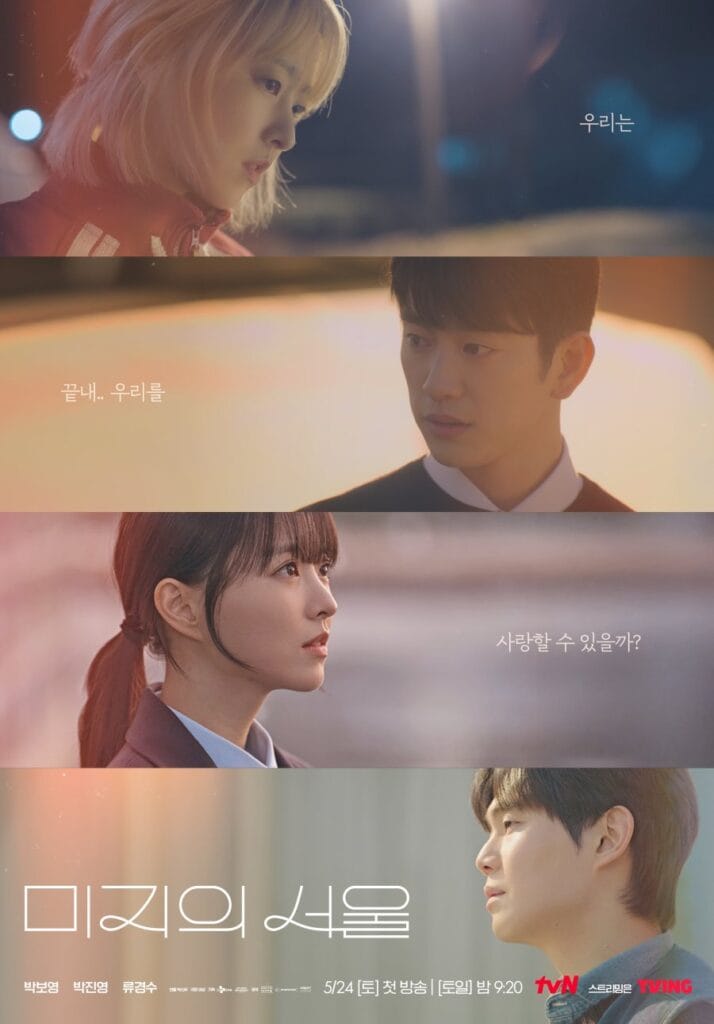
Drama: Our Unwritten Seoul
Native Title: 미지의 서울 (Miji-ui Seoul)
Also Known As: Seoul, the Unknown
Director: Park Shin-woo
Screenwriter: Lee Kang
Release: 2025
Episodes: 12
Original Network: tvN
Tags: family relationship, healing, hidden identity, identity swap, twins, loneliness, character development, fist love, slow-burn, friendship
Where to watch:

Cast
Main Role


Support Role
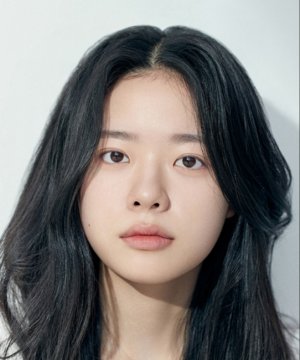
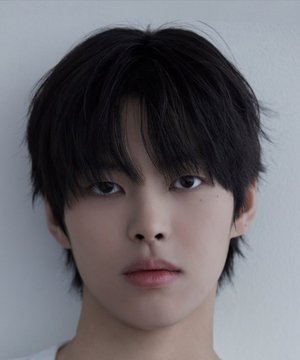
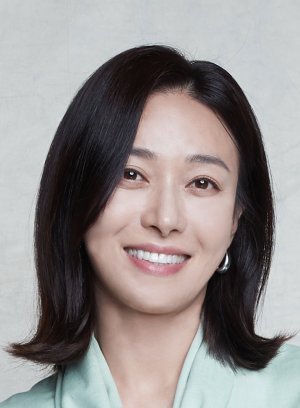
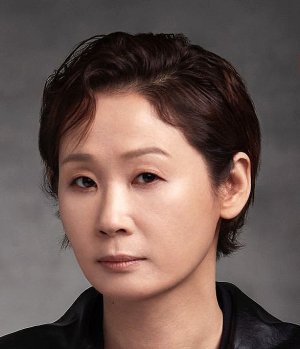
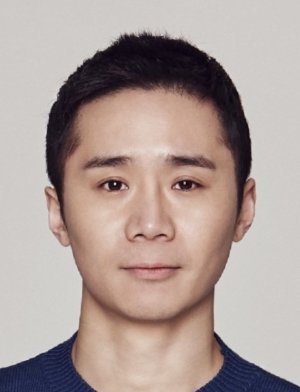
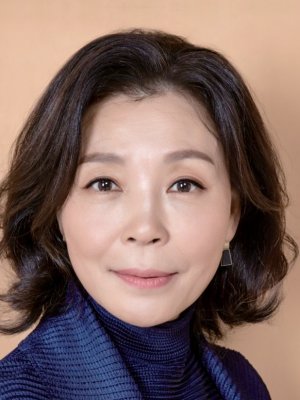
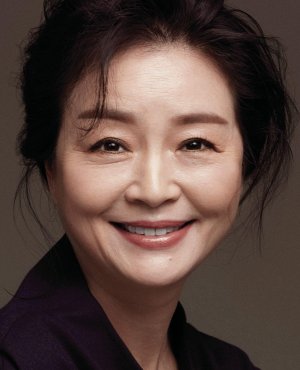
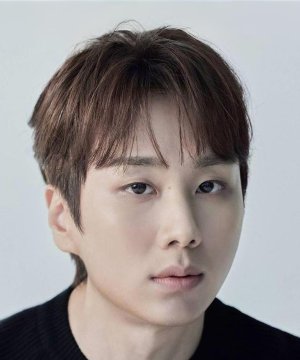
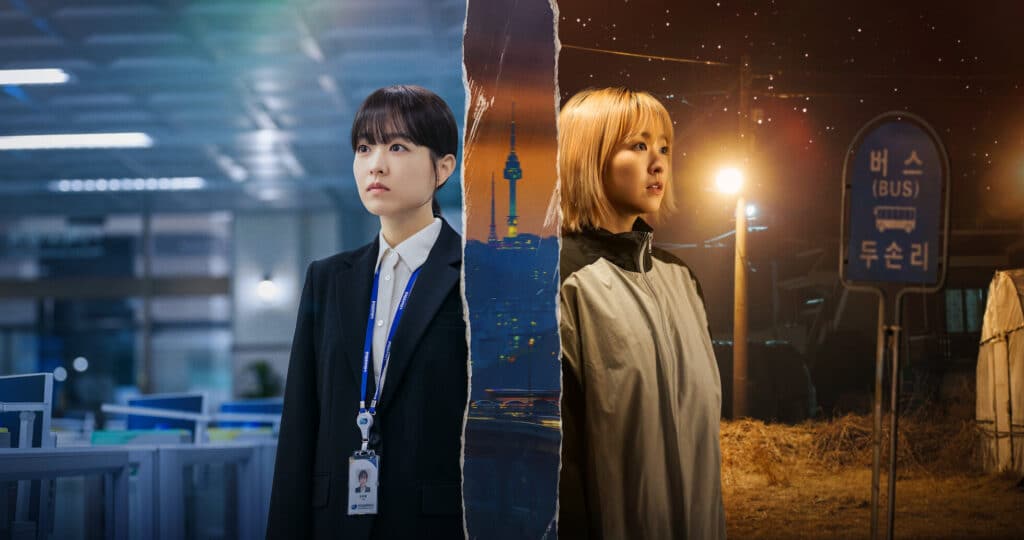
Where Quiet Stories Begin to Heal
There are dramas you enjoy. There are dramas you recommend. And then there are dramas that live inside you — quiet, comforting companions that remind you you’re not alone. Our Unwritten Seoul is the latter.
This twelve-episode journey, beautifully penned by Lee Kang and sensitively directed by Park Shin-woo, is not loud, not showy, not hyped. But somehow, it reaches into the quietest parts of you — the tired corners, the buried dreams, the bruised memories — and simply says: You’re still here. You’re doing your best. That’s enough.
It’s a drama that doesn’t rush. It breathes. It pauses. It allows scenes to linger, silence to settle, and characters to think before they speak. It doesn’t offer solutions wrapped in a bow — instead, it gives you fragments of healing, glimpses of connection, and quiet realizations that settle in days later.
The Premise: When Names Shape Destiny
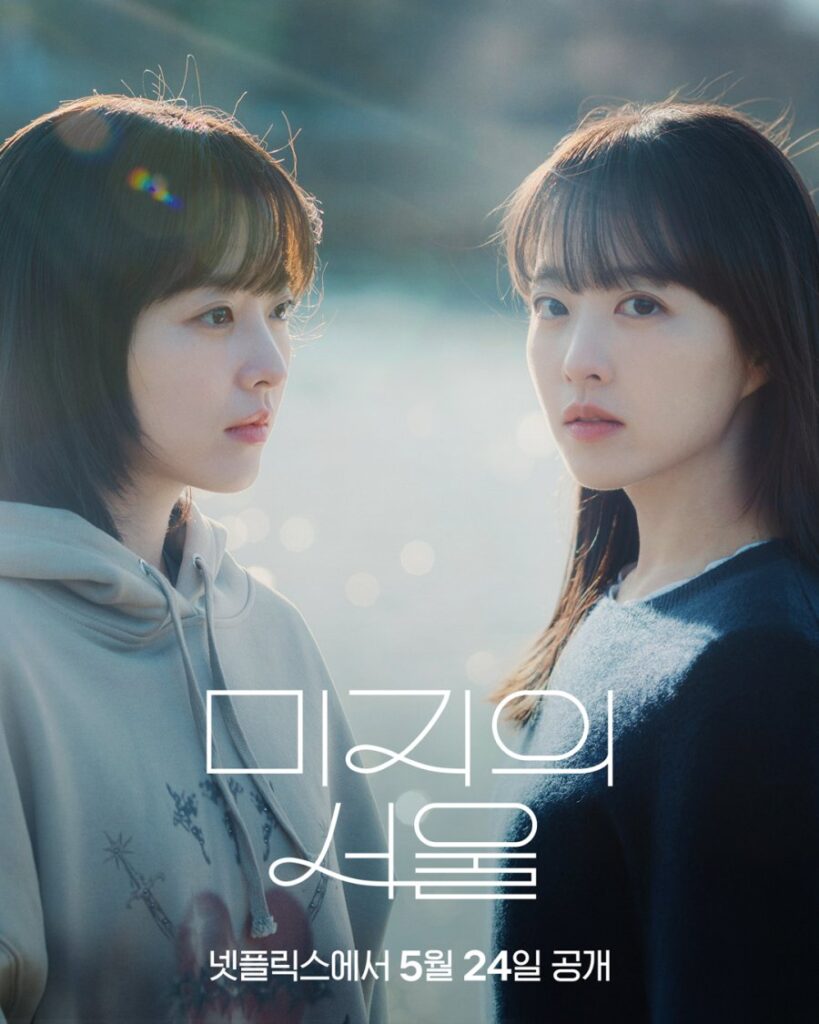
Yu Mi-Ji and Yu Mi-Rae (both played by Park Bo-young) are identical twins born seconds apart but burdened by vastly different expectations. Mi-Rae, whose name means “future,” was always the one with direction: straight-A student, obedient daughter, prestigious job at a top firm. Mi-Ji, the “unwritten” one, had talent, passion, and wild dreams — until an injury ended her sports career and left her drifting.
When Mi-Rae unravels under the weight of corporate abuse and personal despair, the sisters do the unthinkable: they swap lives — just like they used to as kids.
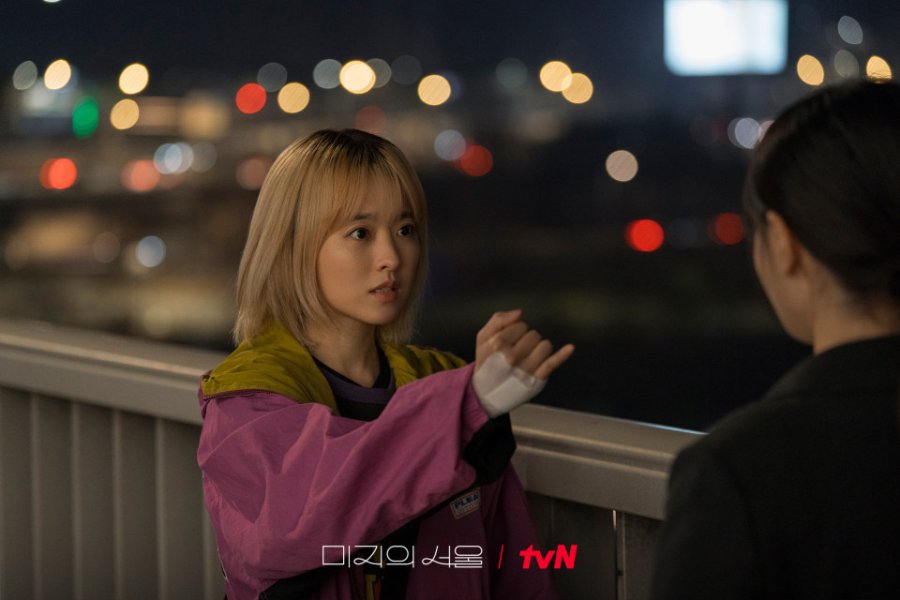
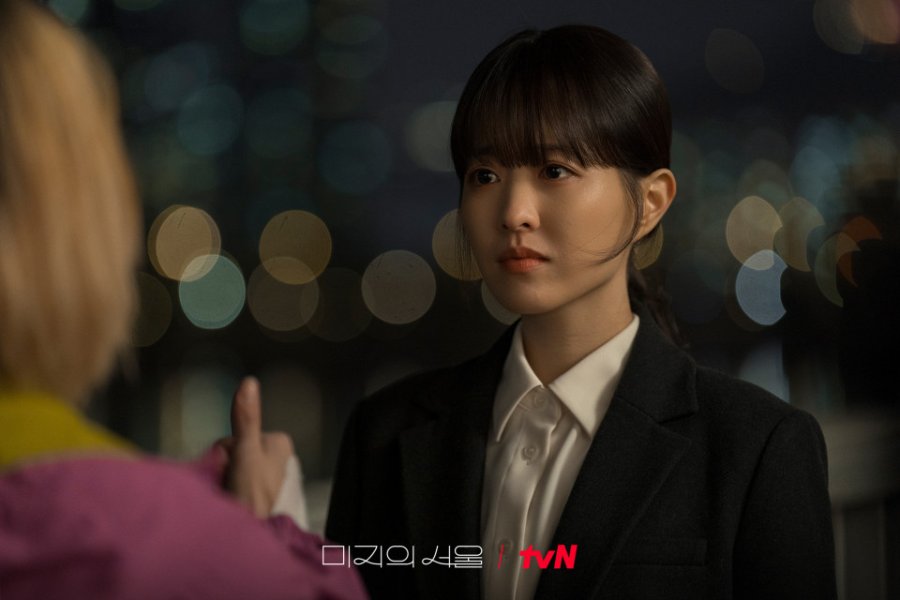
What begins as a deception soon becomes something deeper: a chance to understand each other, confront their own ghosts, and rewrite the parts of themselves they’d buried for too long.
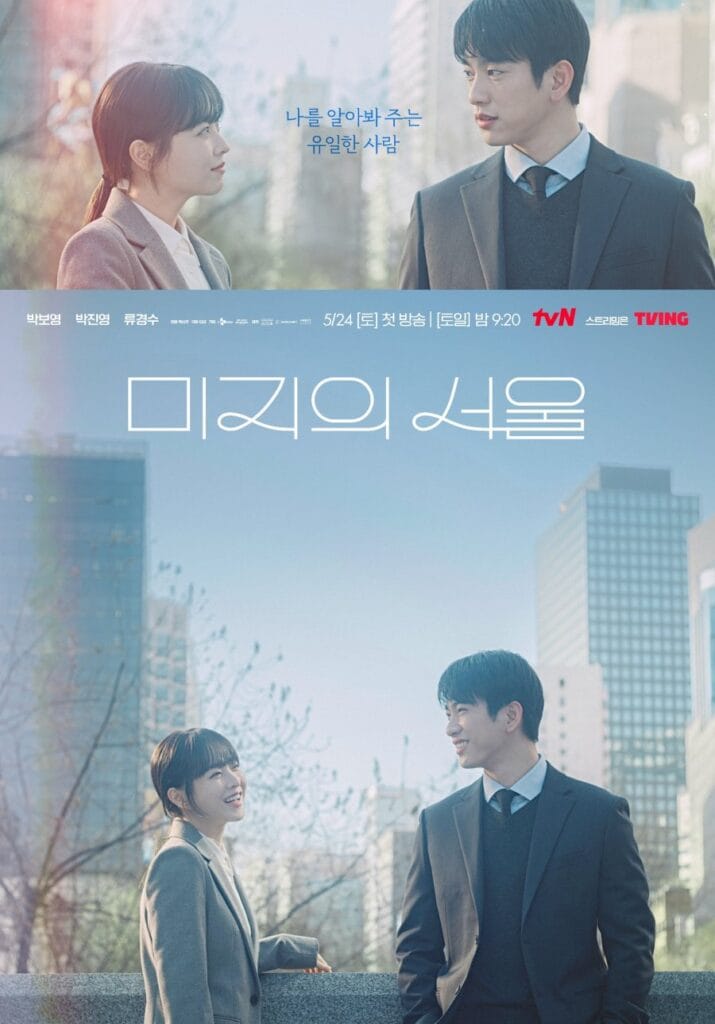
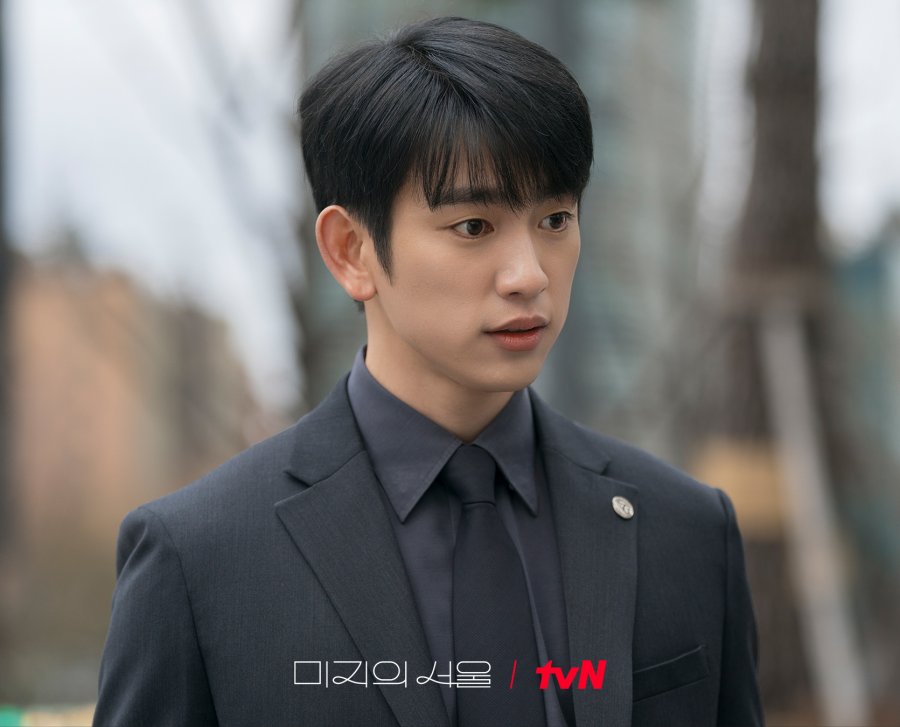
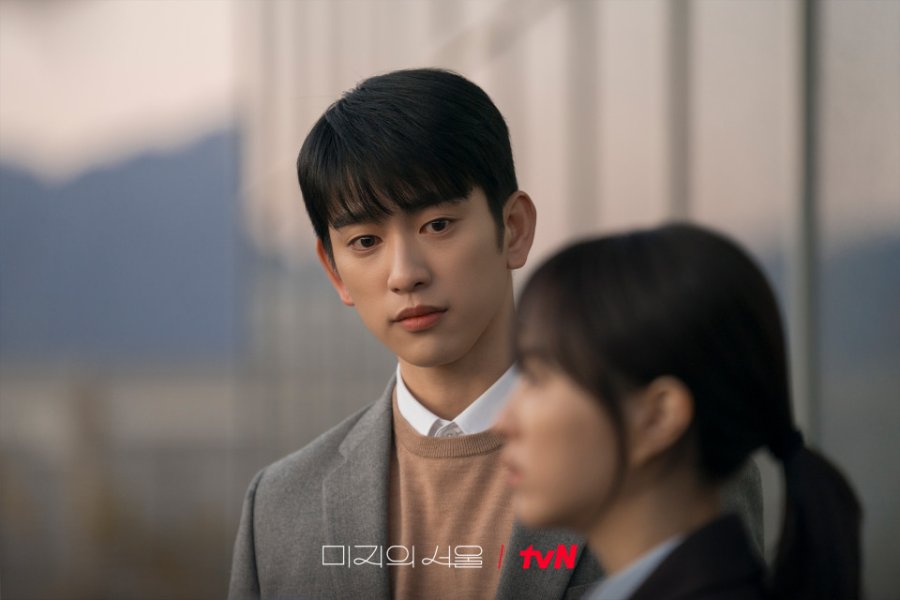
Caught in the middle is Lee Ho-Su (Park Jin-young), a lawyer carrying emotional scars and a progressive hearing loss, whose encounter with the sisters changes the course of all their lives.
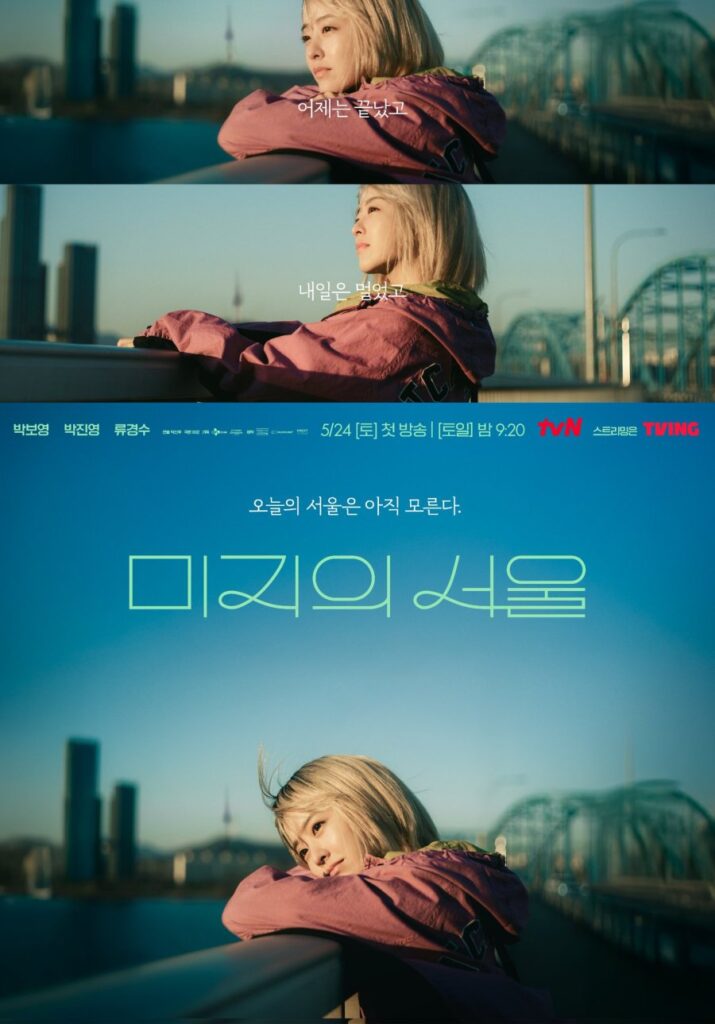
Yesterday is over. Tomorrow is yet to come. Today is yet unknown.
— Yu Mi-ji
A Portrait of Suffering — and of Survival
From its opening episode, Our Unwritten Seoul makes it clear that this is not about plot twists or dramatic spectacle. This is a drama about living. About the messy, painful, and beautiful process of learning how to be kind to yourself.
The show doesn’t romanticize suffering, but it honors it. It treats trauma — especially burnout, depression, grief, disability, and generational pain — not as plot points, but as lived realities. And in doing so, it creates one of the most emotionally honest K-dramas in recent memory.
It reminds us that healing is not about sudden epiphanies. It’s about small, often invisible, choices. It’s about showing up.
The Dual Brilliance of Park Bo-young
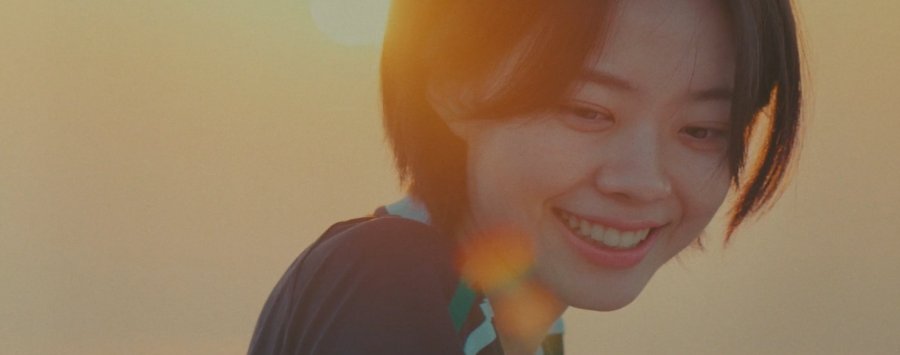
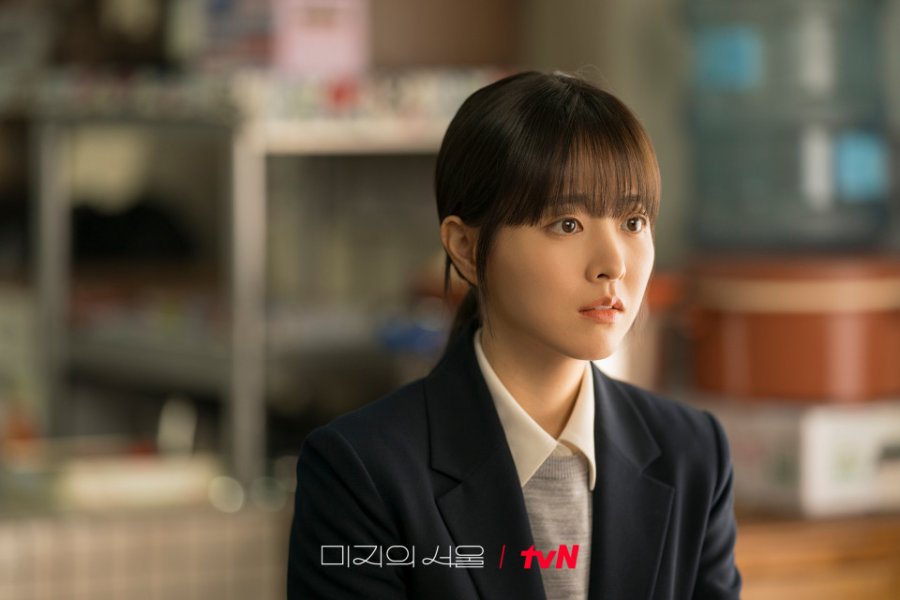
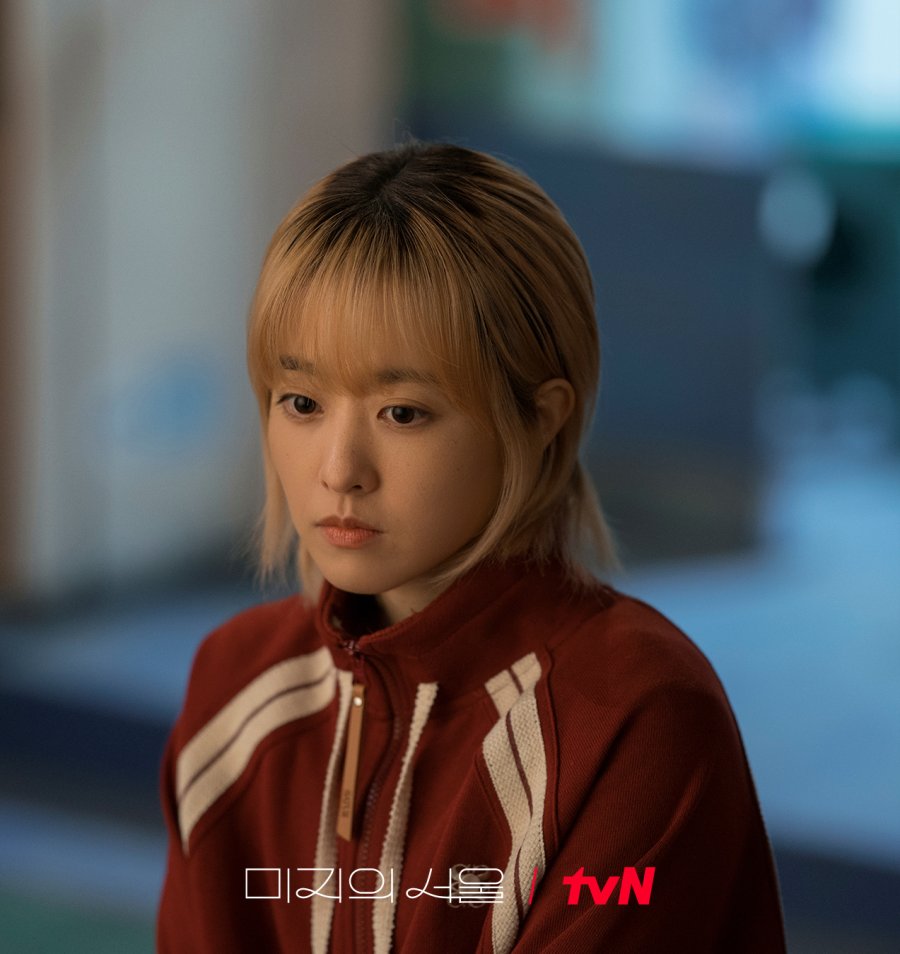
Let’s not mince words: this is a career-defining performance. Park Bo-young doesn’t just play twin sisters — she inhabits two entirely distinct human beings, each layered with history, pain, and longing. At times, it’s hard to believe it’s the same actress on screen.
Mi-Ji is scrappy, impulsive, and outwardly cheerful — but you can see her bruised heart in her silences. Mi-Rae is polished, reserved, and composed — until the cracks show and the weight of expectation comes crashing down. When they impersonate each other, Bo-young performs a performance within a performance — and it’s nothing short of masterful.
There’s a particular dream sequence — a quiet, final goodbye wrapped in memory — that wrecked me in ways I didn’t expect. Not because it was tragic, but because it was tender. Her sobs, her smile, her stillness — it felt like watching a soul unravel and rebuild in the same breath.
Ho-Su and the Weight of Quiet Love
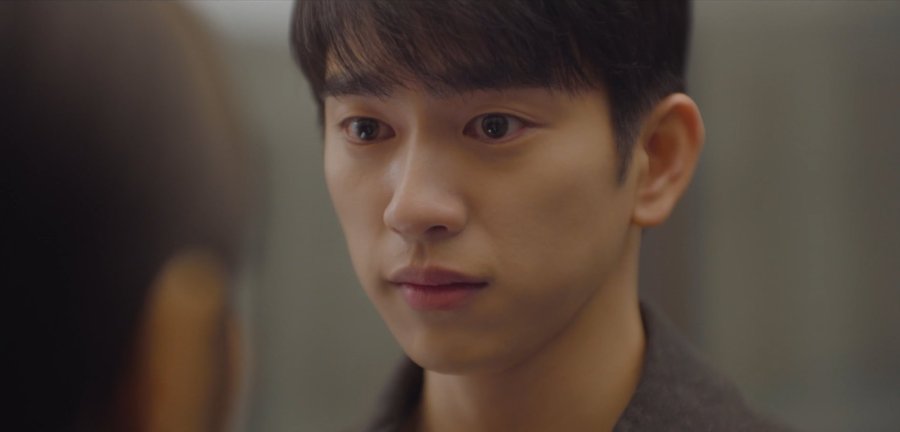
Park Jin-young brings such quiet restraint to Ho-Su that you almost don’t notice how powerful his performance is — until it’s too late and you’re crying over a single look, a trembling lip, or a hesitant sign. His character could’ve easily fallen into melodrama, but instead, he embodies a kind of love that is patient, scared, and deeply human.
His relationship with Mi-Ji grows organically, rooted in shared silences, mutual respect, and emotional reciprocity. It’s not about fixing each other, or even completing each other — it’s about walking side by side, imperfect and unfinished.
No one decides when to start falling in love for the first time.
— Lee ho-su
Their romance isn’t about passion or fireworks. It’s about knowing. About finding someone who has seen you at your lowest and still chooses to stay. About love as companionship, not conquest.
Han Se-jin: The Quiet Kindness We Almost Missed
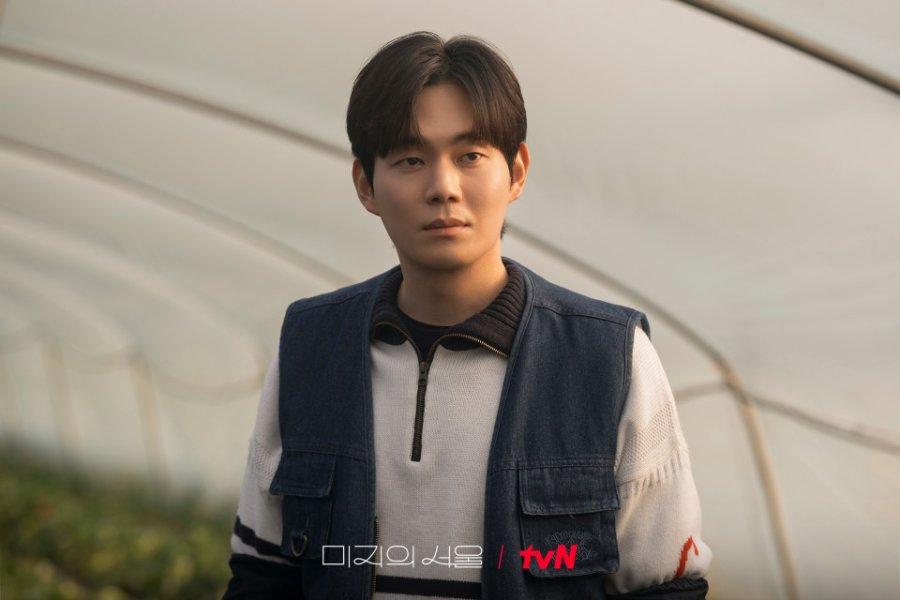
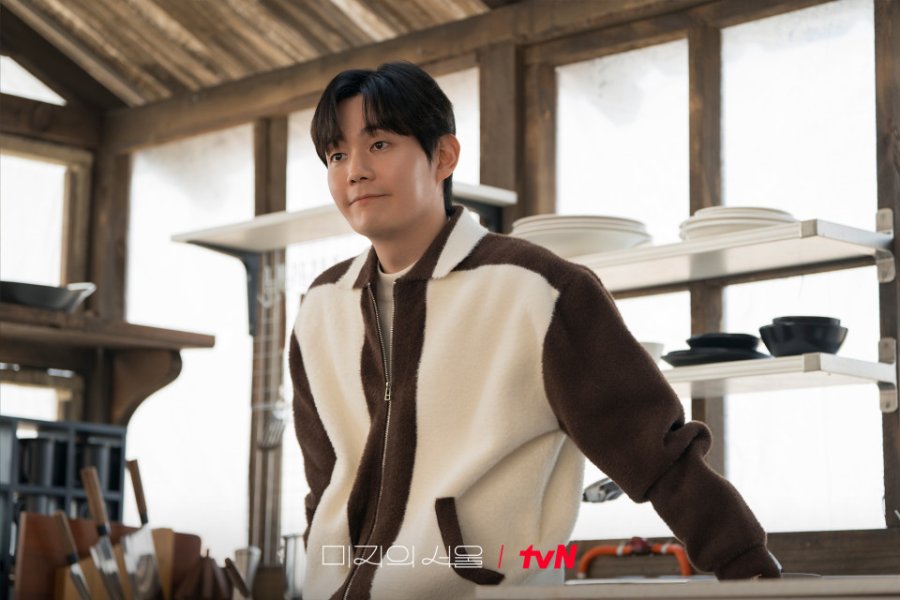
Han Se-jin, played with quiet grace by Ryu Kyung-soo, is not a man of grand gestures — but of small, difficult truths. On the surface, he seems distant, maybe even cold. But as the story unfolds, we see him for what he really is: someone doing his best in a world that never gave him the tools to express his pain.
Se-jin is a product of quiet pressure — of ambition that hollowed him out and love he didn’t know how to hold. And yet, he’s never cruel. He listens. He hesitates. He shows up — clumsily, imperfectly, but sincerely. His moments with Mi-Rae aren’t dramatic; they’re real. Full of regret, but also respect. Two people who could have worked — in a softer timeline.
In the end, Se-jin isn’t a failure. He’s a reminder — that some people are loving you quietly, even when they don’t know how to say it out loud.
Seoul, Seen Through Memory and Melancholy
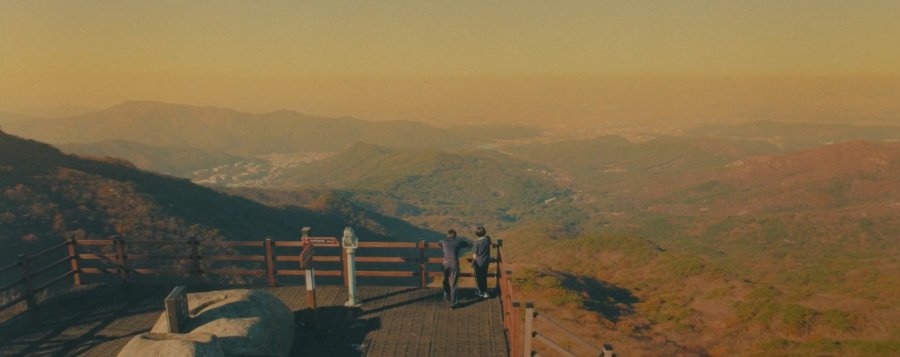
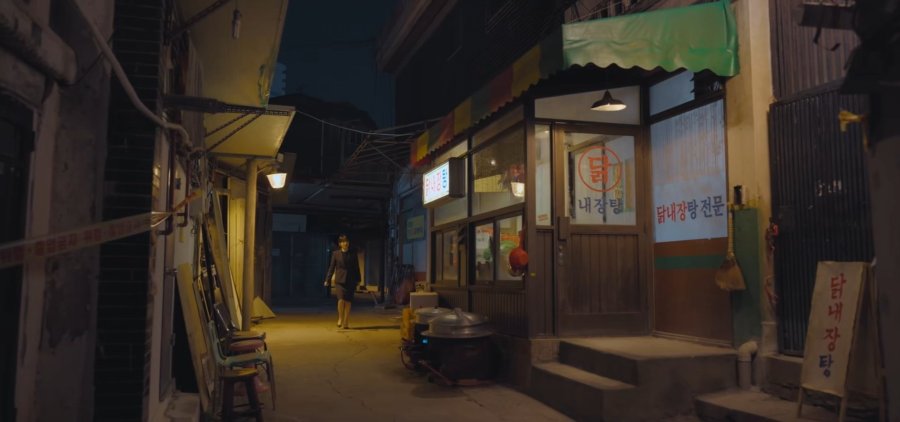
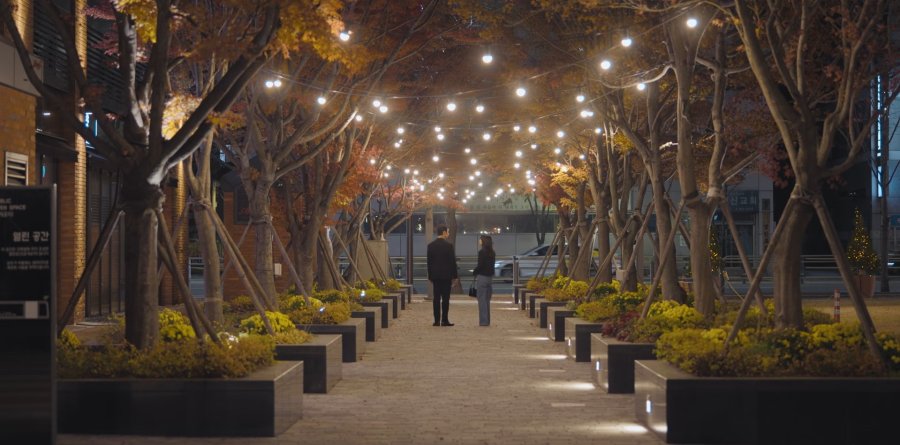
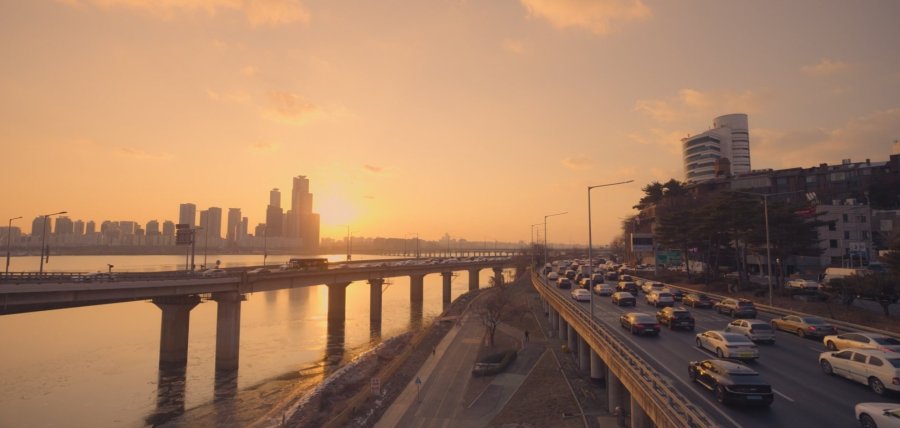
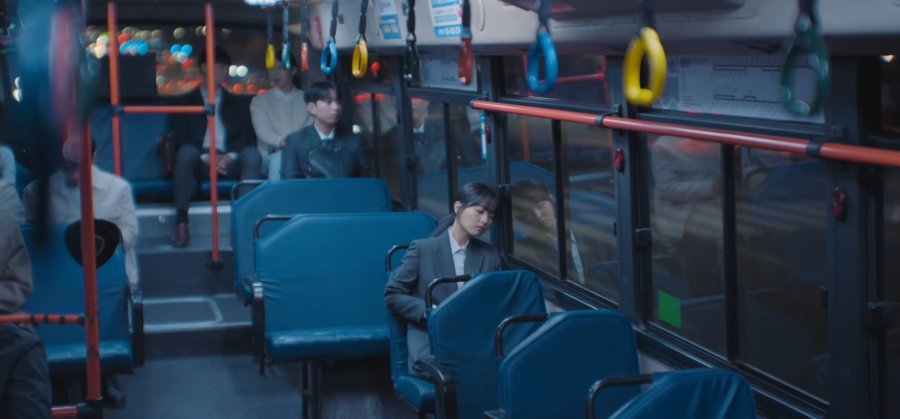
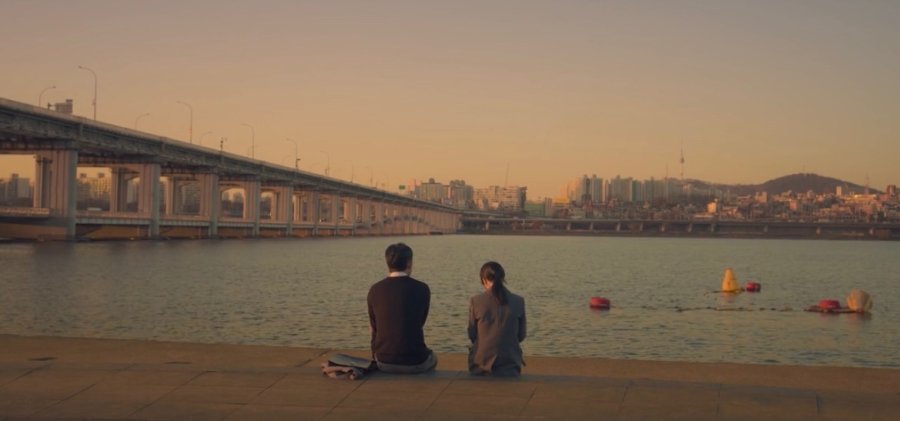
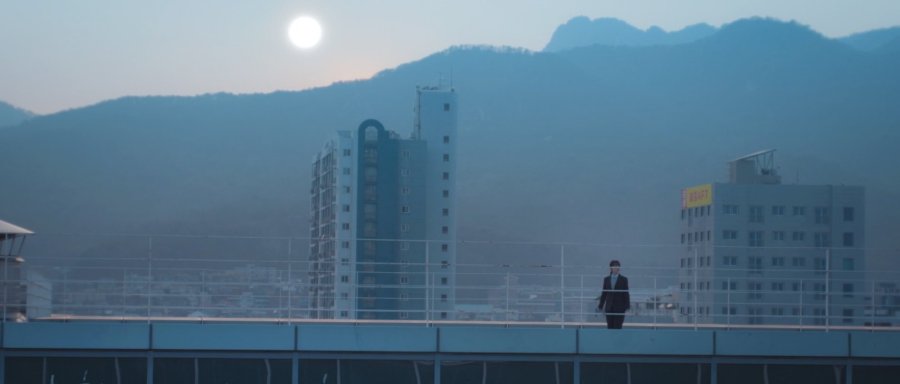
Seoul, in Our Unwritten Seoul, is not the neon-lit metropolis of most K-dramas. It’s a living, breathing presence — not just a backdrop, but a character in its own right. This isn’t the romanticized Seoul of K-pop videos, but the quieter city of early morning street sweepers, worn-out staircases, back alleys, river walks, and late-night buses.
I thought I was walking the city. But the city was walking me.
— Yu Mi-ji
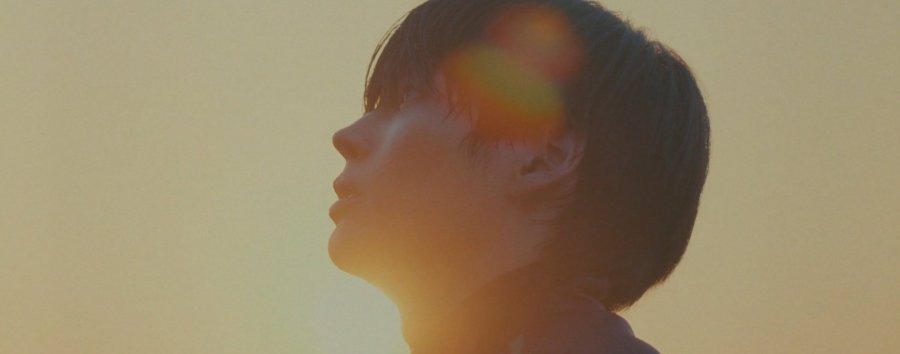
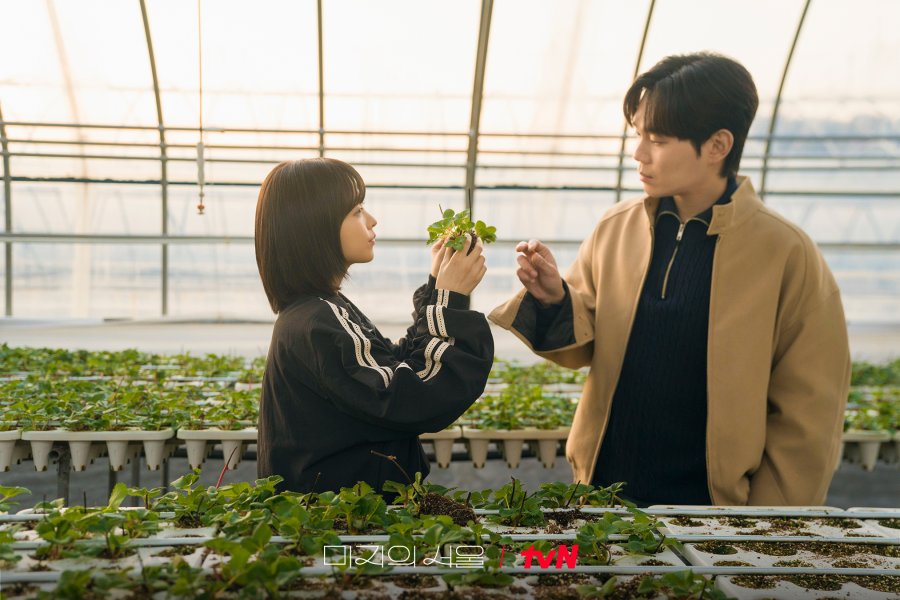
The cinematography finds beauty in the mundane: light through a kitchen window, shoes left at a doorway, hands sorting strawberries, someone sitting alone in a bookstore. Even folding chairs and instant coffee on a rooftop become charged with meaning. It’s a Seoul seen not through spectacle, but through memory and melancholy.
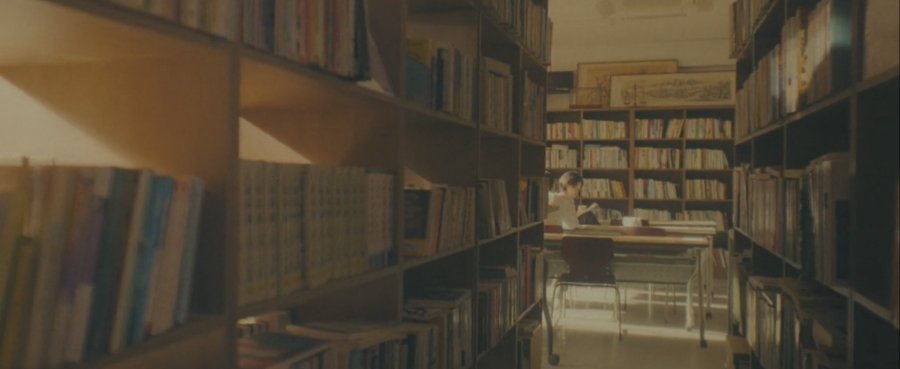
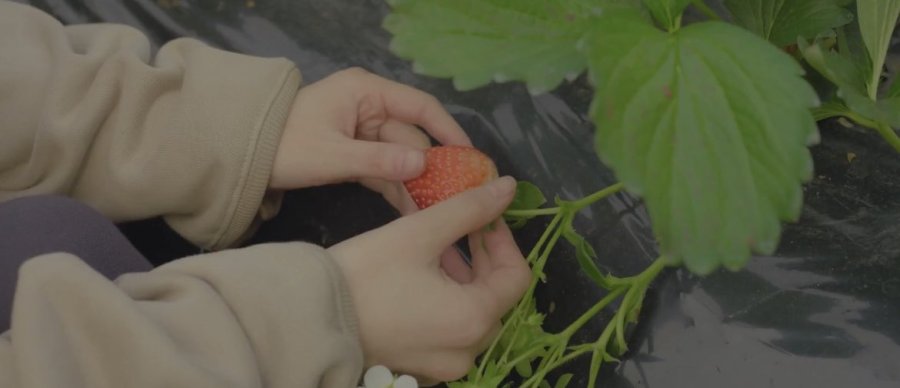
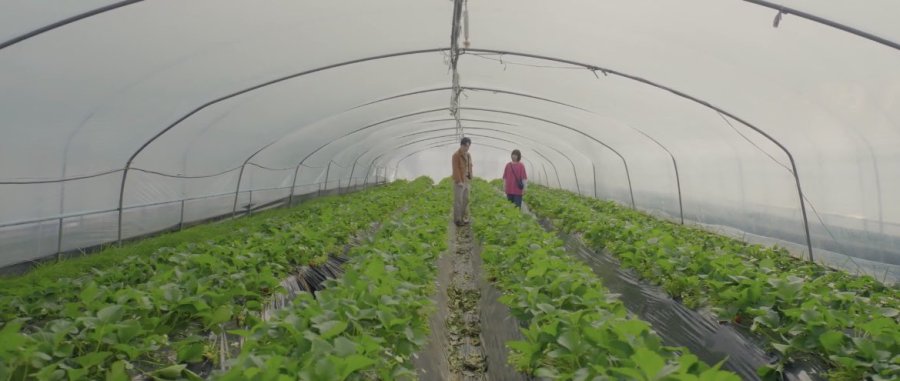
Park Shin-woo’s direction is deeply poetic. He uses wide shots not to impress but to emphasize distance — emotional, familial, existential. Narrow alleys mirror the characters’ psychological corners. There’s recurring visual symbolism — reflections, shadows, pairs — echoing the theme of duality and hidden selves.
The Soundtrack: Echoes of Stillness and Solace
The soundtrack in Our Unwritten Seoul is minimal and disarmingly intimate. Most of the time, you hear only the city breathing — rain on pavement, rustling leaves, distant footsteps. The music doesn’t intrude; it arrives gently, often acoustic, like a whisper in your ear. Sometimes, the score fades entirely, allowing ambient sounds to speak instead. It’s a sonic stillness that mirrors the show’s emotional restraint — quiet, aching, and deeply human.
🎧 Songs like “Yellow Spring” by Choi Yu-ree, “Hush of Sunset” by 10cm, and “On Your Side” by Sion don’t just play — they linger. They carry the grief and tenderness the characters can’t bring themselves to say aloud.
But the one that stayed with me most was “In You” by Isaac Hong. Gentle and raw, it feels like someone placing a hand over your heart — steadying it. A quiet reminder that even in our worst moments, we are allowed to be held.
This is a soundtrack you don’t just hear — you inhabit it. It moves beside you like a memory you didn’t know was waiting, whispering what you didn’t know you needed to feel.
Breaking Cycles, Rewriting Pages
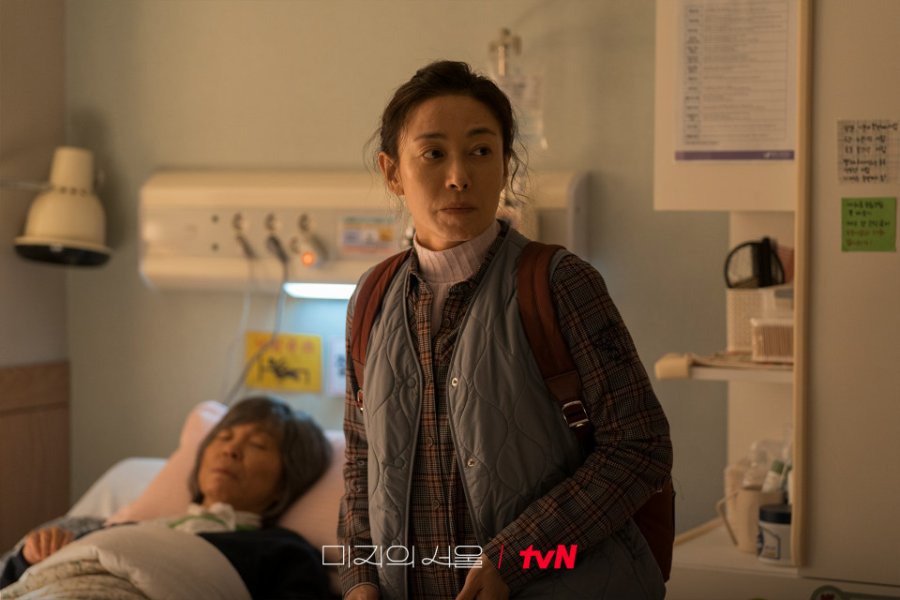
The supporting characters — from Mi-Ji’s mother (Jang Young-nam), to Ho-Su’s stepmother (Kim Sun-young), to restaurant owner Ro-sa — each carry their own burdens. There’s no villain here. Only people trying, failing, and trying again.
One of the show’s most poignant messages is how trauma echoes through generations. How silence becomes inheritance. But Our Unwritten Seoul doesn’t stop at identifying the pain — it gently shows how to break free from it. Through conversations, apologies, letters, dreams.
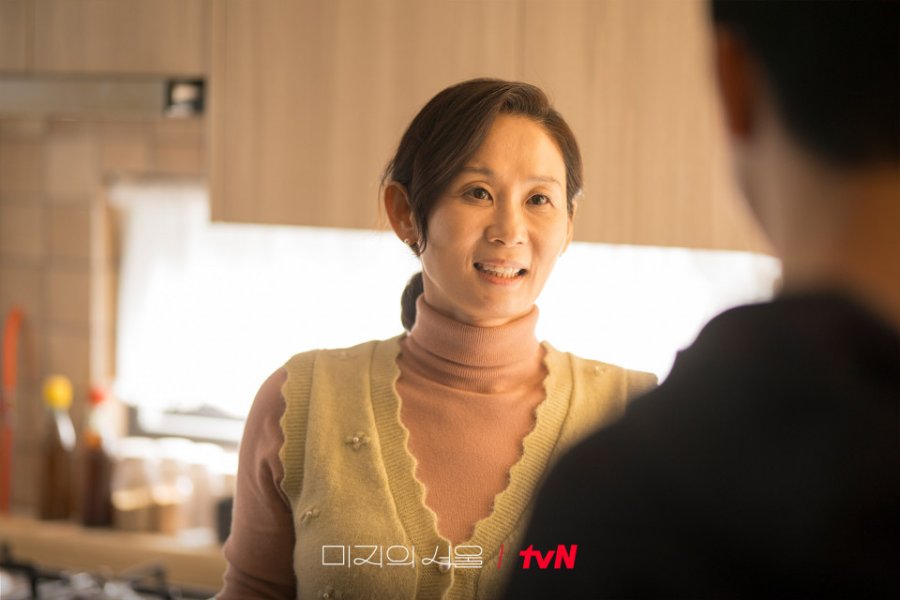
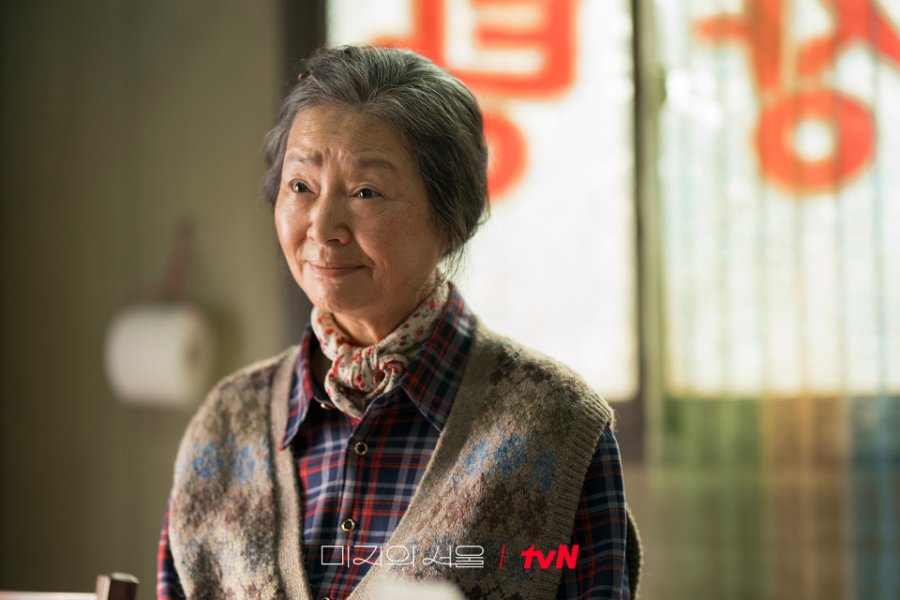
Love isn’t about winning or losing. It’s about remaining on the same team until the very end, even if you lose. Love is about staying together, even if you lose a hundred or thousand times.
— Yeom Bun-Hong [Ho-Su’s mother]
Mi-Ji choosing to study psychology. Mi-Rae starting her own small business. Ho-Su learning sign language. These are not dramatic reinventions. They are real, human choices. Tiny acts of rebellion against despair.
The Finale — A Gentle Goodbye
Episode 12 is one of the most satisfying finales I’ve seen. Not because everything is perfect, but because everything makes sense. Mi-Rae and Se-Jin don’t get a fairytale ending, but they get a fresh start. Mi-Ji and Ho-Su don’t get married yet — but they choose each other. The grandmother’s death is devastating, but also full of grace.
This is a drama that leaves you feeling not just emotional, but nourished.
Final Thoughts: A Quiet Masterpiece
I didn’t expect Our Unwritten Seoul to mean so much to me. I thought I was sitting down to watch another quiet healing drama. But what I found instead was a companion — gentle, wounded, and wise. A drama that doesn’t ask to be watched, but felt. And I felt every moment.
I’ve watched dozens of dramas this year. Some were flashier. Some had higher ratings. But none of them stayed with me like Our Unwritten Seoul did.
It doesn’t promise fireworks. It offers warmth. It doesn’t try to fix everything. It simply teaches us to sit with the unknown — to honor silence, endure discomfort, and find meaning in fragments. And in doing so, it became one of the most quietly moving stories I’ve ever encountered — not just on screen, but in life.
This drama is a gift to anyone who has ever felt unseen. To anyone rebuilding their life one broken piece at a time. To anyone who has ever whispered, “I don’t know who I’m supposed to be anymore.”
Healing isn’t loud. It’s not linear. It’s not always visible. But it is possible. It begins when we choose to show up — again, and again, and again.
Every ending carries the seed of something new. Each blank page is not emptiness, but a beginning. Our stories don’t stop when we feel lost or uncertain — they keep unfolding in silence, in fragments, in the quiet courage of staying present.
Our story only ends when life runs out of pages.
Until then, we write — hesitantly, imperfectly, bravely.


A quiet masterpiece — and my favorite drama of the year.

Trailer
Recommendations
Disclaimer: All images are owned by their respective creators. Used here under fair use for review purposes. Credits to tvN and associated promotional partners.