REVIEW: “Nine Puzzles”—A Mystery That Solves You Back, One Piece of Memory at a Time
Drama: Nine Puzzles
Native Title: 나인 퍼즐 (Nain Peojeul)
Director: Yoon Jong-bin
Screenwriter: Lee Eun-mi
Release: 2025
Episodes: 11
Original Network: Disney+
Genre: crime, thriller, mystery, drama
Tags: detective, profiler, serial killer, serial killings, co-workers, investigation, murder, police inspector, senior-junior relationship, cold case
Where to watch:



Cast
Main Role


Support Role





🧩 Introduction: The Puzzle Begins
Some mysteries grip you because of their clever twists. Others haunt you because of what they reveal about human nature. Nine Puzzles does both — and then some. With its icy atmosphere, measured tension, and morally grey characters, this 2025 psychological thriller brings a refreshing sharpness to the K-drama crime genre.
Every once in a while, a drama doesn’t just grab your attention — it creeps into your thoughts while you’re doing the dishes or lying awake at 1AM, trying to make sense of a character’s silence. Nine Puzzles was that drama for me.
I went in expecting a clever mystery — cold cases, puzzle pieces, a profiler with trauma, the usual. What I didn’t expect was how quietly unsettling it would be. There are no loud villains, no flashy car chases. Just a woman, haunted by a murder she never truly left behind, returning to a world that quietly moved on — and asking questions most people gave up on a decade ago.
The drama doesn’t beg to be liked. It doesn’t even try to be easily digestible. Instead, it invites you to sit with discomfort, to linger in silence, to examine what guilt and memory do to a person. And that’s exactly what kept me watching.
🧩 Plot Summary (Spoiler-Free)
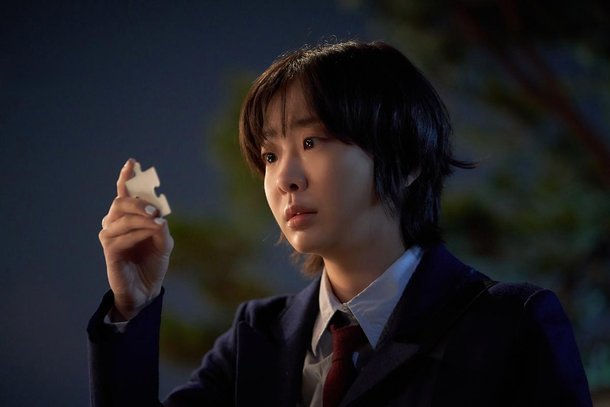
Ten years ago, high schooler Yoon I-na found her uncle murdered in their home — with a single jigsaw puzzle piece left beside his body. As the only person present, she became an unofficial suspect in the public eye, though no arrest was made and the case eventually went cold. That traumatic night shattered her youth and left behind a silence that never quite let her go.
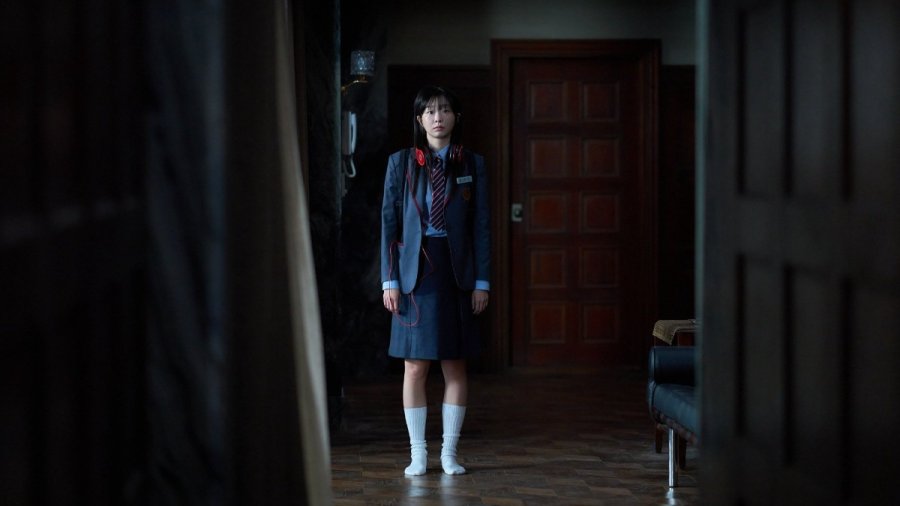
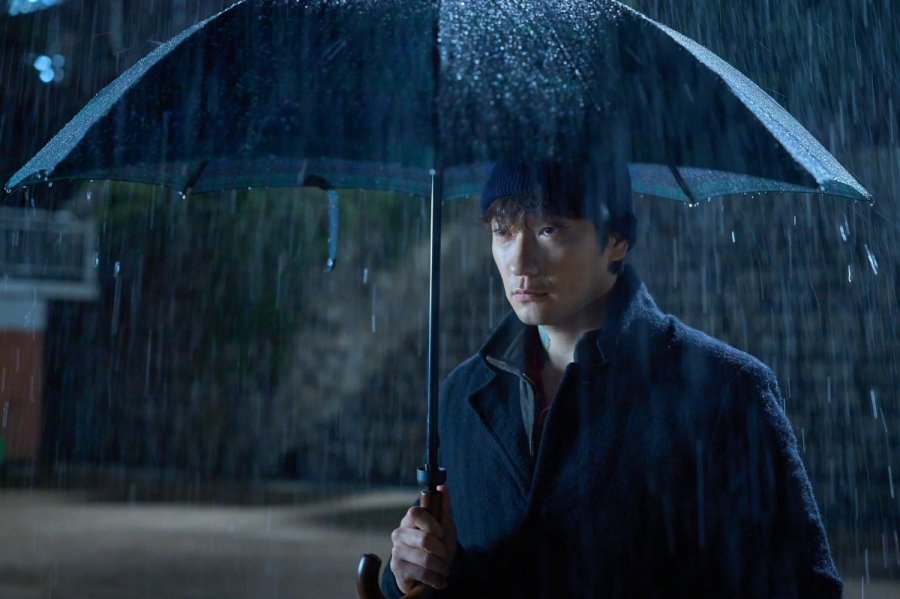
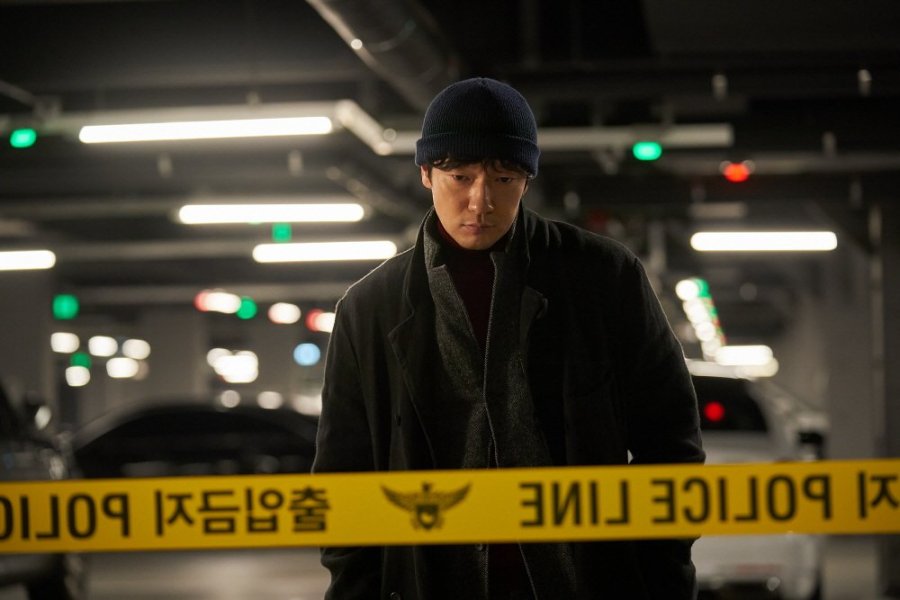
Now, I-na is back — a brilliant, emotionally guarded criminal profiler working with the Seoul Metropolitan Police. Outwardly, she’s moved on. In truth, she’s been waiting. When a new murder appears with the same chilling puzzle piece signature, she seizes the chance to reopen the long-cold case that changed her life. Reluctantly paired with detective Kim Han-saem, who still doubts her innocence, I-na begins a tense descent into the heart of a mystery that spans a decade.
Nine Puzzles isn’t just about solving a crime — it’s about what happens when you revisit the moment that broke you, and realize it never truly ended. The series weaves psychological tension with procedural grit, asking not just whodunit, but whether the truth is something you’re ready to face once all the pieces fall into place.
🧩 Characters & Performances
Yoon I-na (Kim Da-mi)
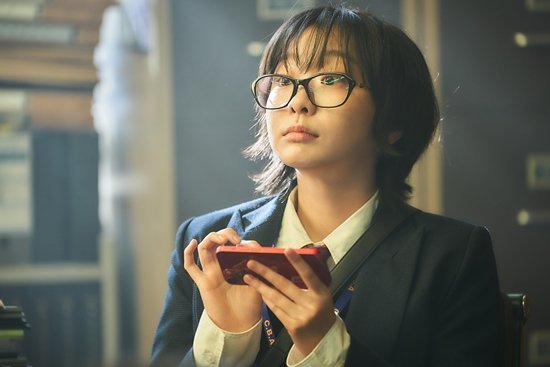
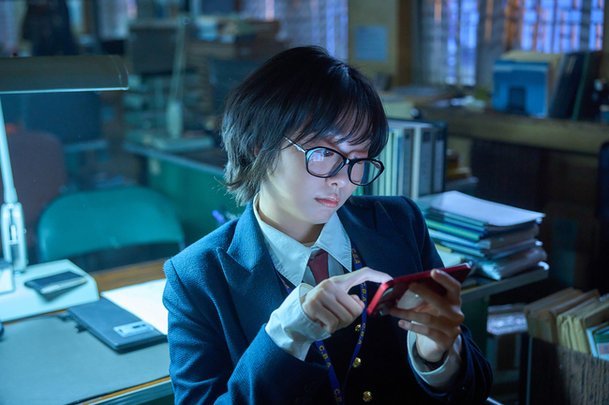
Kim Da-mi gives a restrained yet powerful performance as Yoon I-na, a profiler whose brilliant mind hides years of quiet damage. She’s not your typical K-drama heroine — guarded, calculating, unreadable — but every flicker of emotion behind her calm exterior feels earned.
What makes her so compelling is her duality: investigator and former suspect, insider and outsider. You’re never sure if she’s solving the case or sinking deeper into it. Kim Da-mi plays her with such precision — rarely raising her voice, yet every silence feels loaded. You want her to soften, to breathe — but she never does. And somehow, that makes her more human.
I became a profiler to profile myself.
— Yoon I-na
I’ve never been accused of murder (thankfully), but I have walked through days trying to seem fine when nothing inside felt that way. I-na’s restraint — that almost clinical control — hit me harder than I expected.
Kim Han-saem (Kim Jae-young)
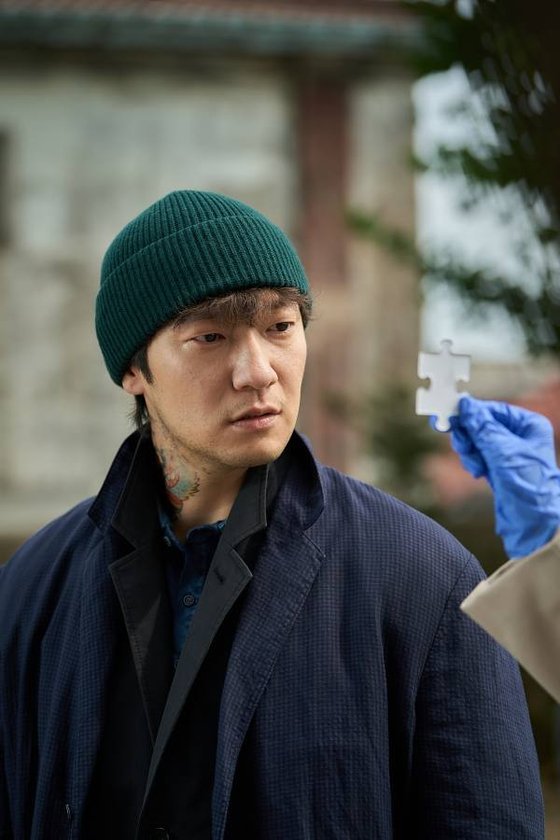
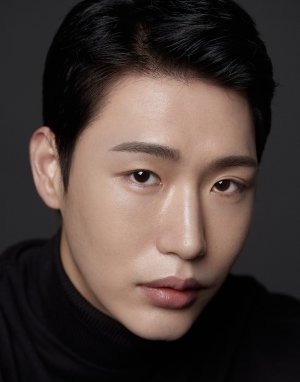
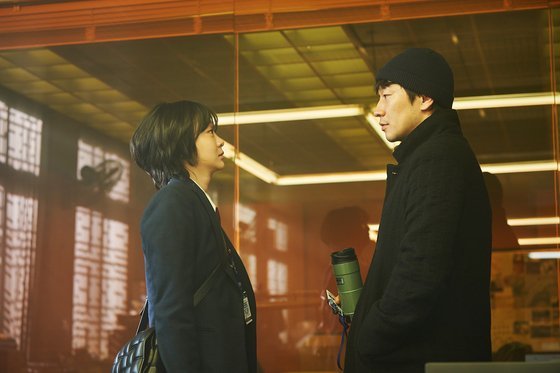
As the detective who once suspected I-na and now becomes her uneasy partner, Kim Han-saem is a study in skepticism and pride. Kim Jae-young plays him with a mix of gruff resolve and buried empathy. He doesn’t trust I-na — and that tension feeds much of the show’s emotional friction.
Their dynamic isn’t romantic (thankfully), but it simmers with the weight of shared history. Every glance carries layers: accusation, curiosity, and slowly, a kind of hard-earned respect.
Han-saem is the kind of character you don’t warm up to immediately — and you’re not supposed to. But that slow shift, from tension to reluctant trust, felt incredibly real. The way he watches I-na says everything before he ever speaks. I wouldn’t call him likable, but I believed him.
Supporting Cast
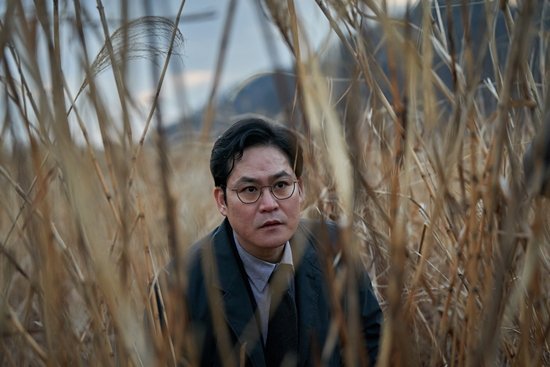
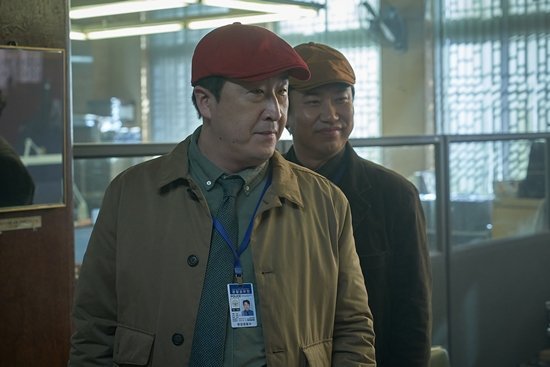
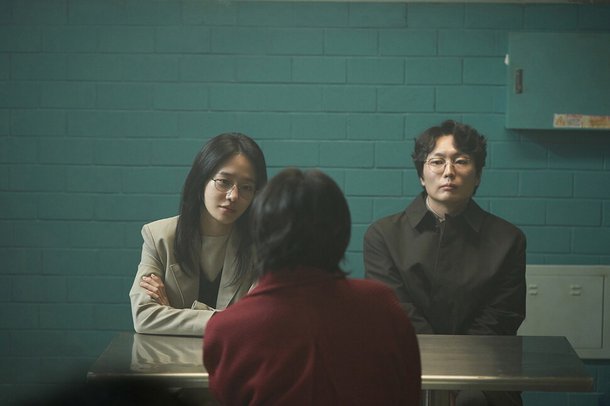
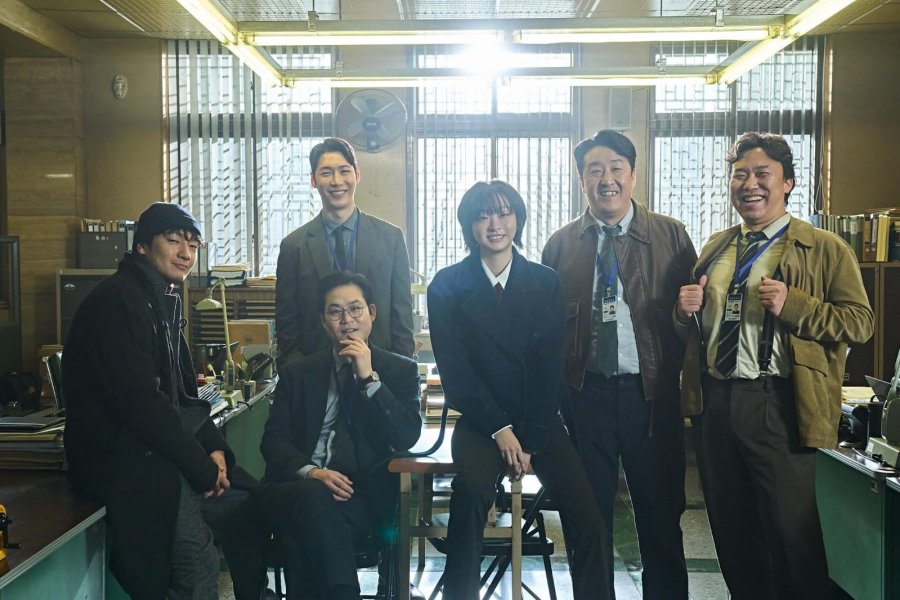
The supporting ensemble — from seasoned detectives to enigmatic suspects — adds quiet weight without stealing focus. Each character feels deliberately placed, not just to push the plot, but to shape the world around I-na. They bring flickers of warmth, moments of levity, and subtle reflections of I-na’s inner struggle.
They don’t just fill space — they echo different shades of grief, denial, and suspicion. Some offer insight, others resistance, but all enrich the show’s emotional texture. Nine Puzzles feels less like a simple investigation and more like a world where everyone is haunted by something — not just the profiler.
🧩 Themes & Symbolism
Trauma, Memory, and Identity
At the heart of Nine Puzzles lies a deeply personal exploration of how trauma reshapes memory — and by extension, identity. I-na’s past isn’t just something she remembers; it’s something she relives, filters, and questions. Her entire professional life is built on reading others, yet she struggles to fully understand herself. The show poses a quietly devastating question: What happens when the person you’re profiling is you?
This blurred line between profiler and subject adds a psychological depth that’s rare even in the best thrillers.
Trust and Moral Ambiguity
Trust is a currency no one seems willing to spend in Nine Puzzles. Every character operates with caution, suspicion, or agenda. Even I-na and Han-saem, partners in theory, are always measuring each other’s moves.
The show also resists easy moral binaries. It challenges the idea of what makes someone “suspicious.” Is it a lack of emotion? Guilt? Silence? As we follow the trail of clues, we’re forced to question not just who the killer is — but how we judge guilt at all.
I do think that everyone around me is a suspect. You’re the only one that I can trust.
— Yoon I-na
The Puzzle as Symbol
The jigsaw puzzle isn’t just a gimmick — it’s a haunting metaphor. Each piece left at a crime scene represents not only a clue but a psychological taunt. Someone is constructing a narrative, one piece at a time, and I-na is both participant and target.
The number nine also holds symbolic weight: it suggests incompletion, the step before resolution, or even the perpetual search for a missing piece. The title isn’t just about solving a case — it’s about whether some puzzles should be solved at all.
🧩 Direction & Cinematography
Atmosphere & Visual Language
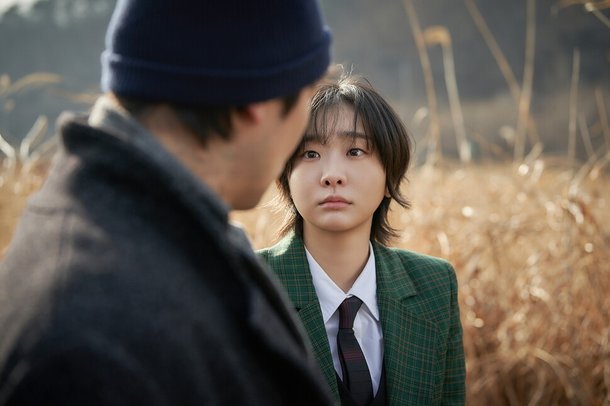
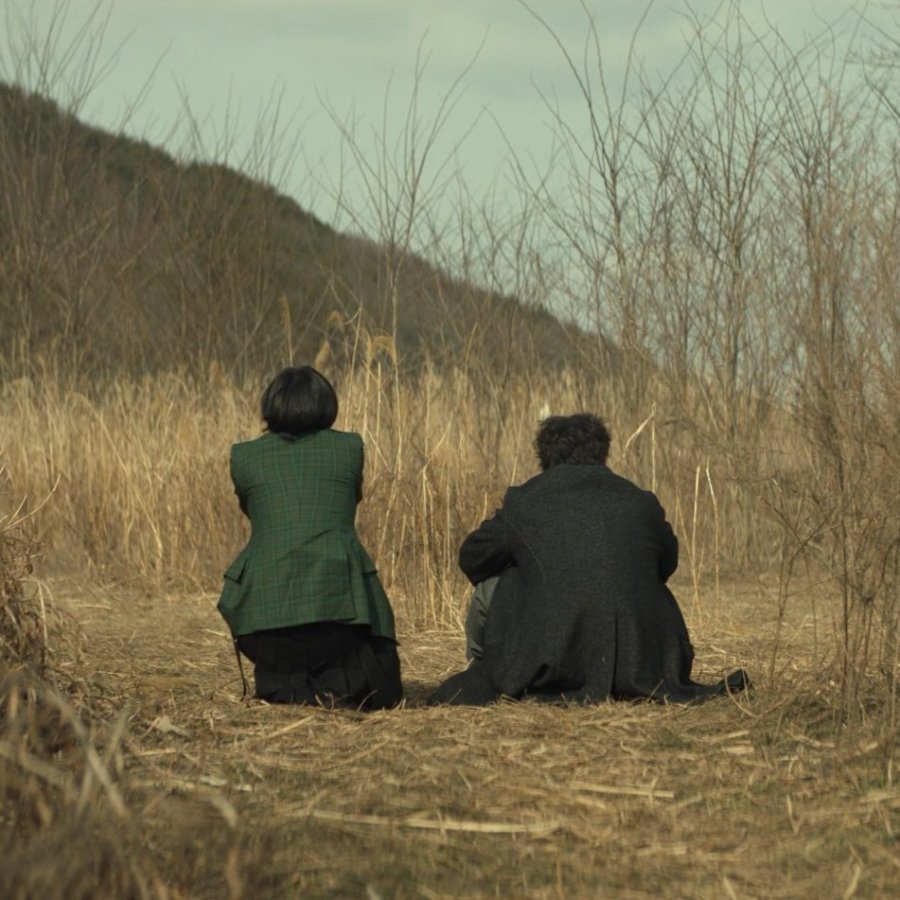
From the very first frame, Nine Puzzles builds an atmosphere of quiet dread. Director Yoon Jong-bin doesn’t rely on flashy visuals or action-packed sequences — instead, he uses restraint like a scalpel. Static shots, slow pans, and lingering close-ups create an eerie stillness that mirrors I-na’s internal world. The camera often watches from a distance, like a silent observer, reminding you that in this story, someone is always watching.
The visual world is cold, calculated, and emotionally detached. Greys, cold blues, and sterile whites dominate — leaving everything suspended between memory and reality. There were scenes that made me feel genuinely uneasy, not because of violence, but because the stillness felt too honest. It doesn’t show emotion — it traps it.
Lighting becomes a narrative device in itself. Cold, clinical hues dominate the present, while I-na’s fragmented memories are softened with warmer, dreamlike tones — evoking nostalgia, distortion, and emotional fragility. Mirrors, reflections, and narrow interiors echo throughout the series, subtly reinforcing its central themes of fractured identity and psychological claustrophobia.
Even the city feels like a character: distant, towering, and indifferent. It’s not just a setting — it’s a maze, full of blind spots and dead ends, where every corner might hold another piece of the puzzle… or a lie.
Framing & Rhythm
The cinematography doesn’t just capture the story — it controls its rhythm. Long, unbroken takes without music force you to sit in discomfort. The tension doesn’t build through action but through stillness, silence, and absence. The show doesn’t rush you to the next clue — it dares you to sit with what’s already there.
In that sense, the pacing becomes part of the visual design. Each frame is composed with patience, inviting the viewer to look closely — and linger uncomfortably. In a drama full of silence, the way things are shown often speaks louder than what’s ever said.

🧩 Writing & Pacing
Writing: Subtle, Taut, and Purposeful
Nine Puzzles doesn’t spoon-feed its audience — and that’s exactly what makes it so compelling. The writing leans into restraint: dialogue is spare, but heavy with implication. Conversations aren’t just exchanges of information; they’re power plays, psychological fencing matches where silence often says more than speech.
Each episode builds carefully on what came before, threading past and present through small but deliberate reveals. The script respects the viewer’s intelligence — clues are scattered like breadcrumbs rather than neon signs, and part of the satisfaction comes from putting them together yourself.
What stands out most is the emotional economy: no melodrama, no grand declarations. Instead, the weight of guilt, suspicion, and loss is carried in fragmented memories, withheld glances, and quietly devastating lines.
Sometimes the smartest minds are the loneliest places to be.
— Yoon I-na
Pacing: A True Slow Burn
I won’t lie — the pacing challenged me at times. There were moments I found myself wishing for more action, more confrontation. But that’s when I realized: the tension isn’t in the chase — it’s in the waiting. In the not knowing. In the emotional landmines you step on when you revisit a memory you thought you’d buried.
Nine Puzzles unfolds with the patience of someone assembling a jigsaw puzzle: slowly, methodically, and sometimes frustratingly. The early episodes prioritize character psychology over action, letting tension quietly simmer beneath the surface. But when the pieces start to fall into place — especially halfway through — the urgency builds in a way that feels earned, not forced.
The pacing mirrors I-na herself: calm on the outside, storm underneath. If you’re expecting a thrill-a-minute procedural, this might feel too slow. But if you love stories that pull you in deeper with every breathless pause, this one rewards your patience with a haunting, layered mystery.
🧩 Music & Sound Design
The Score: Minimalist but Impactful
The music in Nine Puzzles doesn’t guide your emotions — it reflects them. The score is subtle, ambient, and often barely there, creeping in rather than announcing itself. It doesn’t swell or dominate scenes; instead, it hovers just at the edge of perception, making silence feel threatening and the tiniest sound feel immense.
The score is quiet — almost ghostly. You don’t notice it at first… and then suddenly, you do. Certain themes repeat gently throughout the series, especially when I-na is alone or lost in memory, creating a sense of psychological continuity. And when it disappears entirely, it’s just as powerful. The absence of music lets breath, suspicion, and dread take over.
Sound Design: Atmosphere Through Absence
What stood out to me most was how the sound design gave weight to even the smallest moments — the silence after a line, the faint click of a puzzle piece on a table. Nothing is loud, but everything is felt. It made the entire world of Nine Puzzles feel delicate, on the verge of cracking.
Every footstep in a hallway, every creak of a door, every shuffle of puzzle pieces — the sound design is sharp, intentional, and loaded with meaning. There’s a deep stillness to the series that allows small sounds to feel monumental, particularly in scenes where I-na is piecing together past events.
Even the urban sounds outside her apartment — traffic, distant sirens, muted voices — feel like part of the emotional environment, emphasizing her isolation in a city full of noise.
That Incredible Intro Sequence
Let’s talk about the intro. It’s arguably one of the most effective and carefully crafted intros of the year: moody, slow-burning, and thematically rich. The design reflects the show’s core themes — puzzles, fractured memory, hidden truths — and prepares you, quietly but insistently, for what’s coming.
And it’s not just style — it adds to the story. You don’t skip it. You rewatch it, wondering if there’s something you missed — a symbol, a flicker, a sound. It feels like part of the puzzle itself.
I still remember how it felt seeing the intro for the first time. The layered imagery, the cold color palette, the haunting music — it sent chills down my spine. That’s when I knew this wasn’t going to be just another crime thriller. It was something else. Something personal. And with every new episode, that feeling deepened.
🧩 Twists & Suspense (Spoiler-Free)
Twists: Clever, Earned, and Emotionally Rooted
Nine Puzzles doesn’t rely on flashy twists or cheap shocks. Its reveals are quieter — more like the final piece of a puzzle clicking into place than a sudden scream in the dark. The brilliance lies in how carefully they’re seeded. If you’re paying attention, the clues are always there — tucked into a glance, a hesitation, or the silence between two moments.
There are at least two major reveals that force you to reassess not only who the villain is, but who’s really been in control all along. And the best part? Even after the truth comes out, you’re left asking: Was that justice… or just closure?
Suspense: A Constant Undercurrent
This isn’t adrenaline-fueled suspense — it’s a slow, psychological chokehold. You feel it in the way characters hesitate before speaking, in the silence before a door creaks open, in the memory flashes that are just a little too unreliable.
What keeps the suspense high isn’t just the danger — it’s the sense that I-na might not be ready for what she’ll find. The closer she gets to the truth, the more personal and emotionally risky the investigation becomes. You’re not just worried someone might get hurt — you’re worried she’ll be right.
Each episode ends not with cliffhangers, but with a lingering feeling: Something’s still missing.

🧩 Comparisons & Influences
A Spiritual Cousin to Beyond Evil
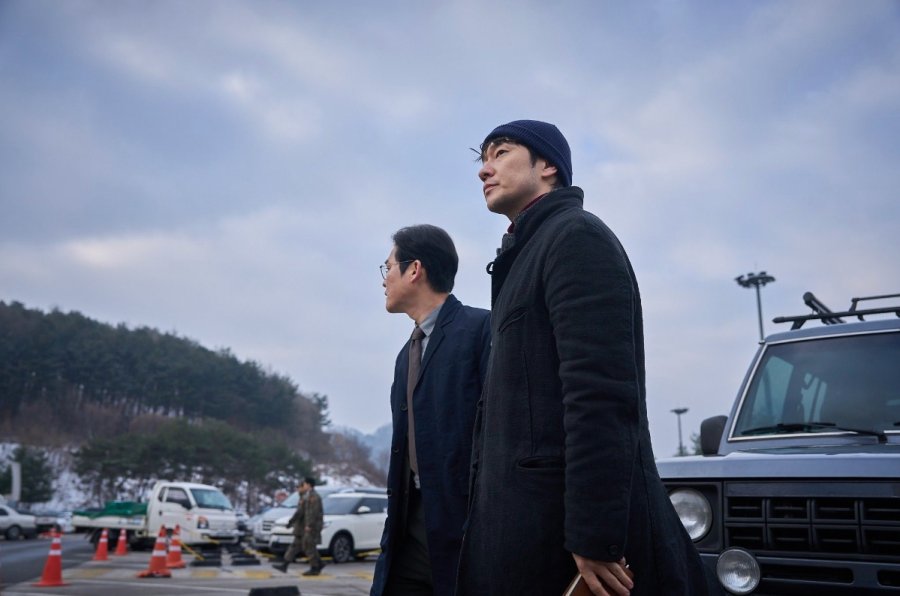
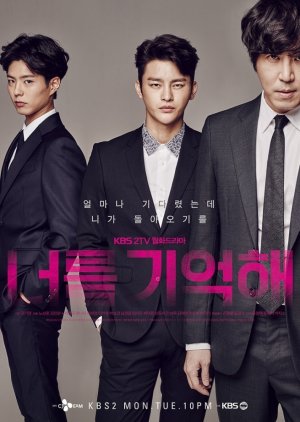
Nine Puzzles draws obvious comparisons to Beyond Evil — and not just because both center around unresolved murders and morally complex detectives. Like Beyond Evil, this drama thrives in its ambiguity. No one is fully innocent, and everyone is playing a long game. The partnership between I-na and Han-saem has echoes of Lee Dong-sik and Han Joo-won’s dynamic: distrust layered over mutual dependency, with a growing sense of shared purpose… or shared guilt.
Both dramas also refuse to rush. They build slowly, deliberately, allowing the emotional stakes to bloom alongside the procedural puzzle.
Shades of Flower of Evil
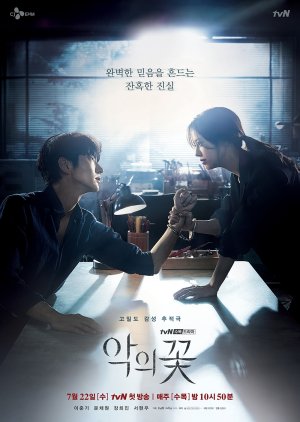
If you enjoyed Flower of Evil’s psychological tension and emotional stakes rooted in unresolved trauma, Nine Puzzles will hit similar notes — though with less romance and more existential dread. The central question of identity — of whether we can ever fully know someone, especially ourselves — sits at the heart of both stories.
The flashbacks, fractured memories, and the idea of a crime being reinterpreted years later also carry strong Flower of Evil DNA.
Western Influences: Mindhunter Meets The Sinner
There are definite touches of Western psychological thrillers too. The cerebral tone and profiler perspective evoke Mindhunter, while the quiet, haunting unraveling of personal trauma feels very The Sinner (especially Season 1). If you’re a fan of mysteries where the detective is as complicated as the case, this will feel like familiar — and elevated — territory.
But make no mistake: Nine Puzzles still feels uniquely Korean in its execution. The emotional restraint, cultural subtext, and the way it centers family, grief, and silence distinguish it from its global peers.
And like The Sinner, it carries that unsettling feeling where you’re not sure if the person investigating is completely okay. (Spoiler: they’re not. And that’s what makes it compelling.)
🧩 Controversies or Criticisms
❗ A Slow Pace That Divides Viewers
Let’s address the elephant in the room: Nine Puzzles is slow. Purposefully, artfully slow — but slow nonetheless. While this worked beautifully for viewers who appreciate psychological depth and atmospheric tension, others found the pacing frustrating, especially in the early episodes. Some expected a classic crime-thriller formula and were thrown off by the show’s meditative tone.
It’s not a show that grabs you by the collar — it sits beside you quietly and waits for you to lean in. That’s not for everyone.
❗ A Lack of Closure for Some Threads
Although the central mystery is resolved, a few secondary elements are left vague or underexplored. Certain characters introduced with intrigue (like side detectives or former suspects) fade into the background without satisfying payoffs. For some viewers, this added to the realism — after all, not every puzzle piece finds its place. But for others, it felt like missed narrative potential.
❗ Emotional Distance
While Kim Da-mi’s performance is undeniably compelling, some critics noted that I-na’s cold, composed demeanor made it hard to emotionally connect with her — at least at first. The show asks you to empathize without the usual emotional cues, which can be challenging if you’re used to more expressive protagonists. However, for those who stick with her journey, the payoff is profound.
🧩 Personal Reflection
Watching Nine Puzzles felt like walking through a fog — not disorienting, but deliberate. Every step forward revealed something I hadn’t noticed before. It’s not a drama that made me cry, scream, or gasp in the traditional sense — but it unsettled me in quieter, deeper ways. It made me think. And long after the final episode ended, I kept turning the pieces over in my mind, wondering what I might’ve missed.
Yoon I-na is not a character I immediately related to, and that’s exactly why she stayed with me. Her silence is a shield, her calm a coping mechanism. And as the story unfolded, I realized that the real “puzzle” wasn’t the killer or the motive — it was I-na herself. What she chose to remember, what she chose to forget, and what it cost her to confront the truth.
The final moments didn’t leave me with closure, but with something rarer: satisfaction without neatness. That’s a hard line to walk, and Nine Puzzles does it with eerie grace.
This wasn’t a drama I loved in a swooning, obsessed kind of way. But I deeply respected it. And honestly? That might mean more.
🧩 Verdict
Nine Puzzles isn’t the kind of drama you binge in a weekend and forget by Monday. It lingers — in its silences, in its questions, and in the spaces between memory and truth. It’s not flashy, not explosive, and certainly not comforting. But it is meticulously crafted, psychologically rich, and refreshingly bold in how it trusts its audience to keep up.
Kim Da-mi delivers one of her most nuanced performances to date, anchoring a story that dares to withhold easy answers. The cinematography, sound design, and minimalist writing work in quiet harmony, creating a world where the scariest things aren’t in the dark — they’re buried deep in the mind.
Yes, it’s slow. Yes, it’s emotionally distant at times. But those are not flaws — they are deliberate choices that deepen the show’s impact, provided you’re willing to meet it on its terms.
This isn’t a drama for everyone. But if you enjoy slow-burn suspense that simmers rather than screams — and characters who carry as many secrets as the killers they chase — then Nine Puzzles might just be the next drama you obsess over. But be warned: in this story, the puzzle is never just a metaphor.


📌 Recommended for: Fans of Beyond Evil, Flower of Evil, and psychological thrillers that value stillness over spectacle.
Best watched when you’re not in a hurry — and you’re ready to feel a little uneasy.
Trailer
Recommendations

Disclaimer: All images are owned by their respective creators. Used here under fair use for review purposes. Credits to Disney+ and associated promotional partners.