REVIEW: “Law School” — When Justice Becomes a Fragile Truth
Drama: Law School
Native Title: 로스쿨 (Loseukul)
Director: Kim Seok-yoon
Screenwriter: Seo In
Release: 2021
Episodes: 16
Original Network: jTBC
Genre: law, crime, mystery, drama
Tags: law school, school, university, murder, courtroom, justice, smart male lead, hardworking female lead, morality
Where to watch:

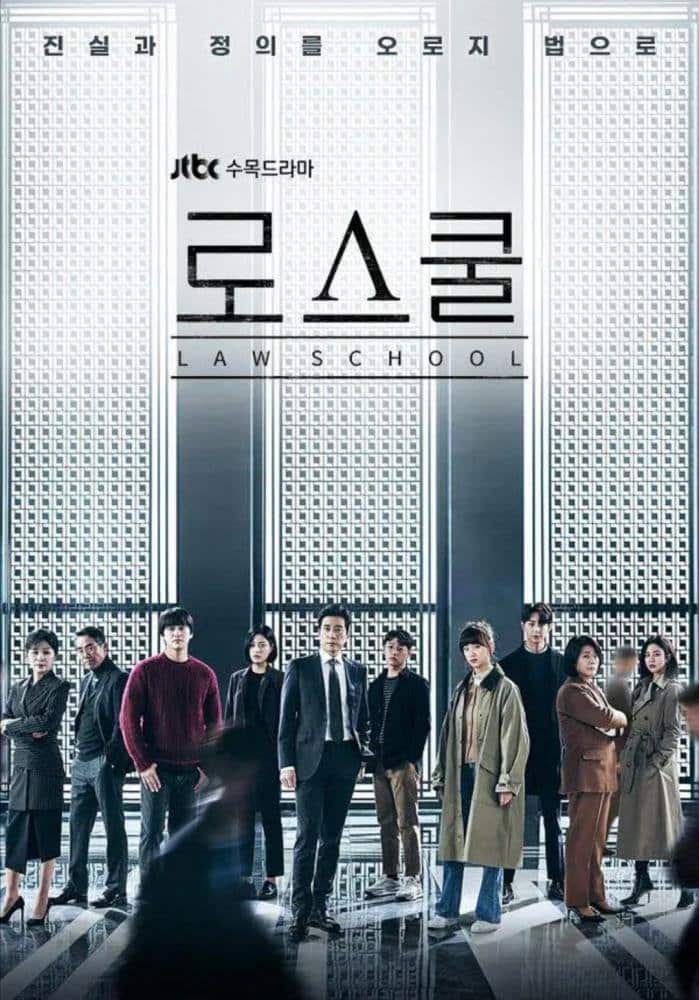
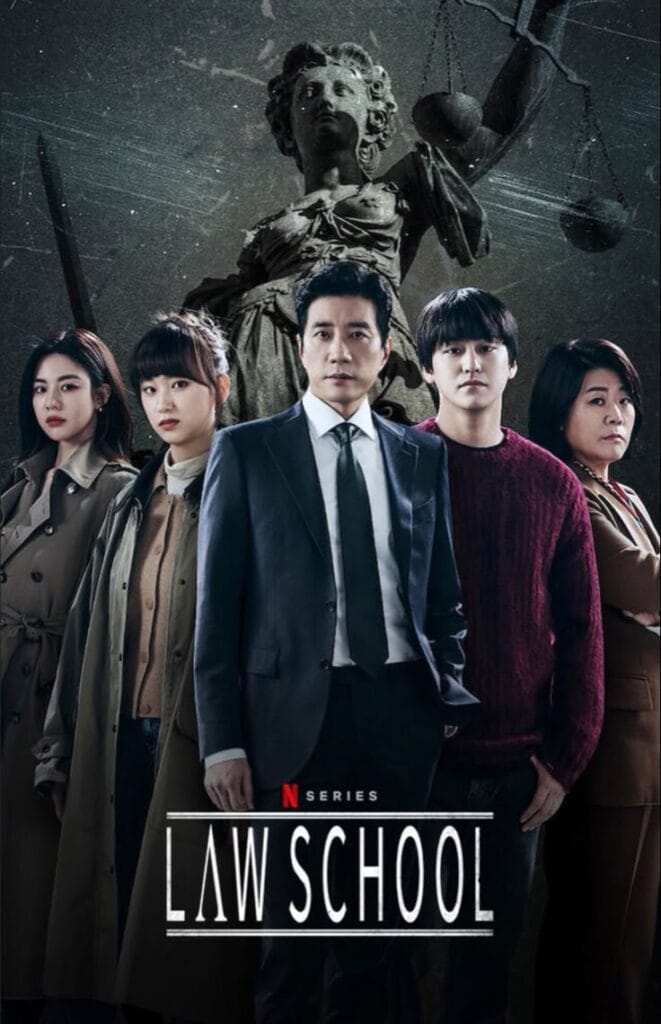




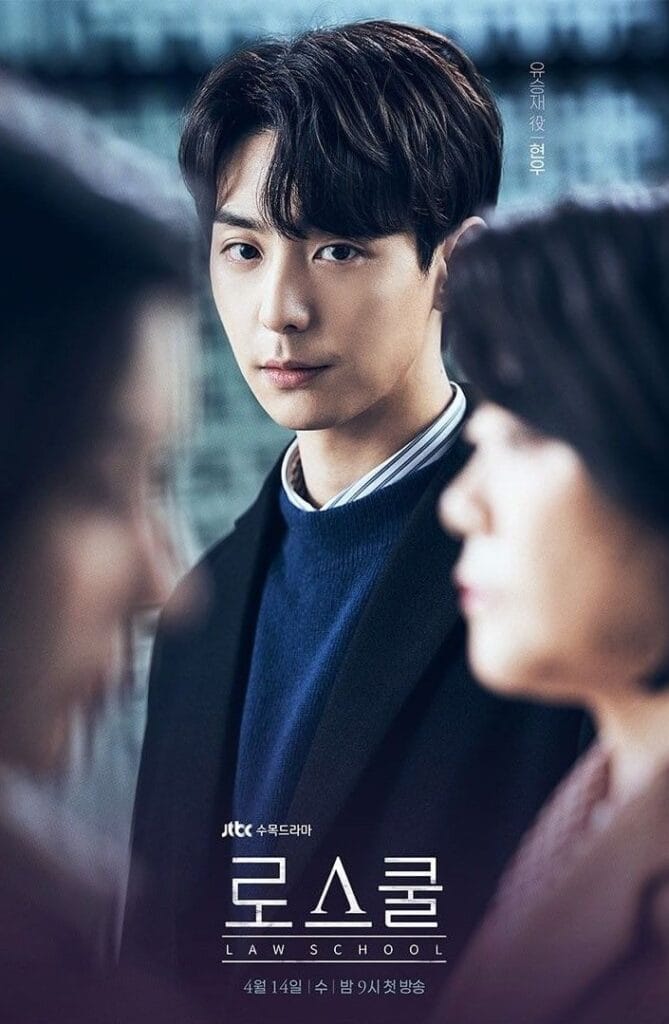
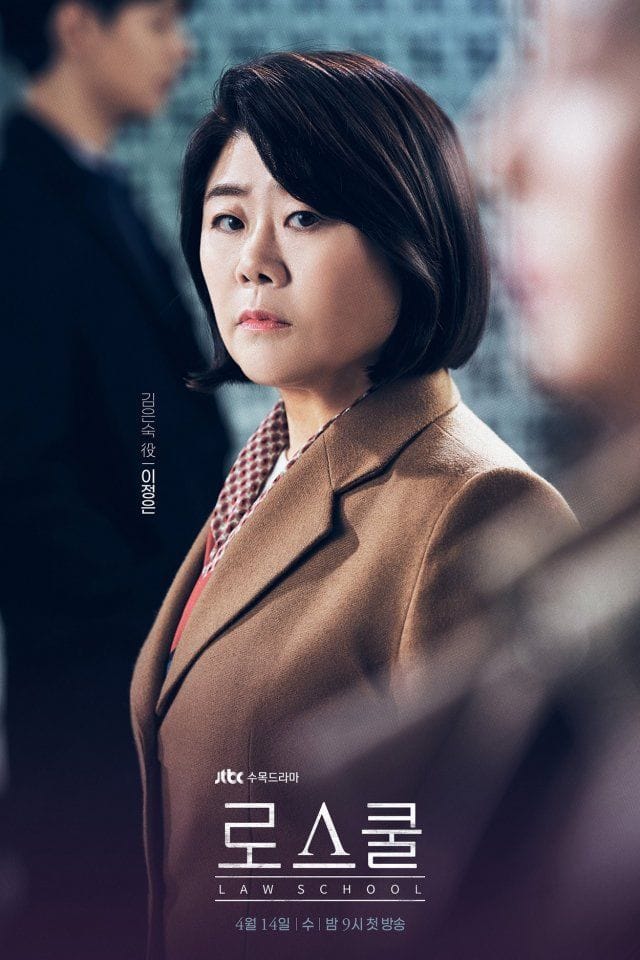
Cast
Main Role
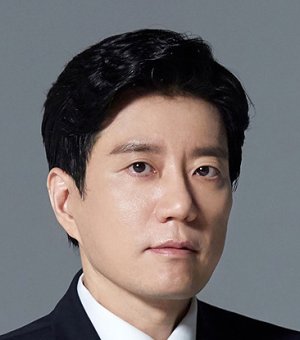
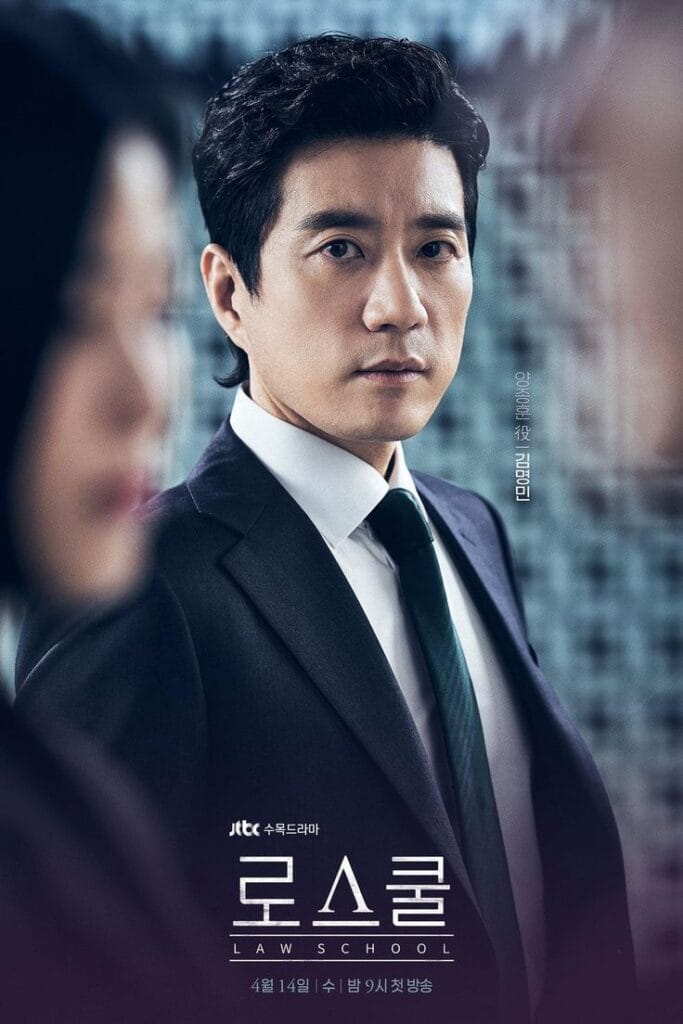
as Yang Jong-hoon

as Kang Sol [A] | Kang Dan

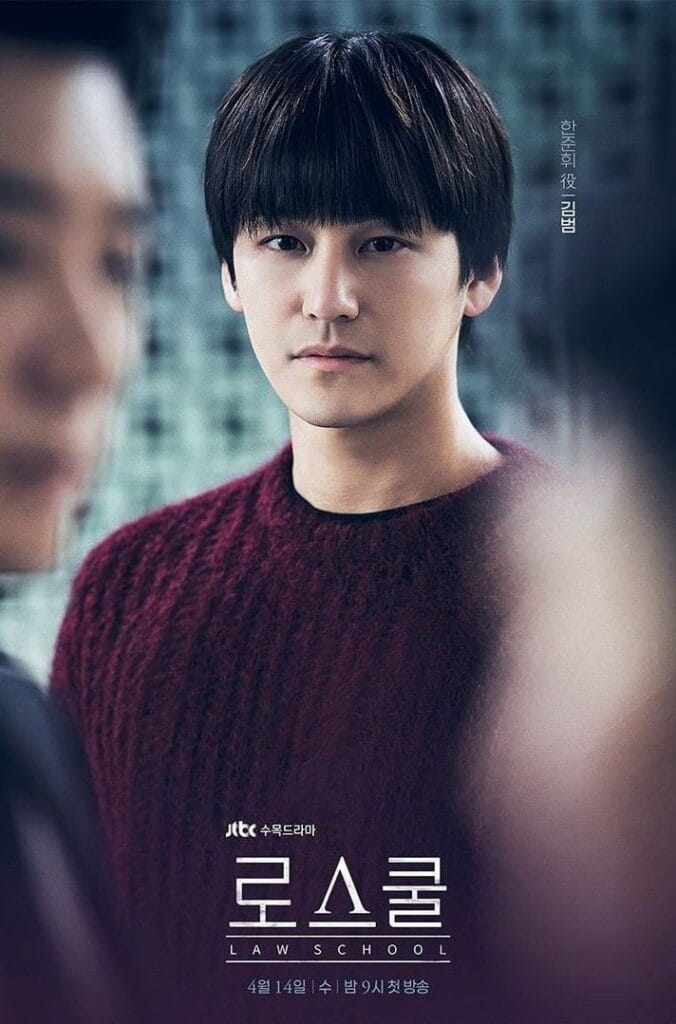
as Han Joon-hwi
Support Role

as Kim Eun-sook

as Kang Sol [B]

as Seo Ji-ho

as Jeon Ye-seul

as Seo Byung-joo

as Oh Jeong-hee

as Min Bok-gi

as Yoo Seung-jae

as Jo Ye-bum

as Sung Dong II

as Kang Joo-man

as Jin Hyung-woo

Introduction
What if every lecture hall felt like a courtroom, and every exam was a trial of your conscience?
Law School (2021) takes the familiar K-drama formula — friendship, ambition, moral struggle — and filters it through a sharp, cerebral lens. Gone are the beach sunsets and coffee dates; here, the tension crackles under fluorescent lights, and the drama unfolds in the silence between objections.
This isn’t a show you watch — it’s one you argue with.
Every episode asks: What does it mean to be just in an unjust world?
JTBC’s Law School, directed by Kim Seok-yoon (The Light in Your Eyes, My Liberation Notes), is part legal thriller, part philosophical debate. It replaces the sweet chaos of love triangles with the slow burn of moral reckoning, and the result is a series that feels both demanding and deeply rewarding.
Summary (No Major Spoilers)
Set in Hankuk University Law School, the drama begins with a shocking incident — the death of a professor during a mock trial class.
What follows isn’t just a whodunit, but a piercing exploration of truth, justice, and integrity within a system designed to test both knowledge and ethics.
At the center stands Professor Yang Jong-hoon (Kim Myung-min), a former prosecutor whose lectures are more like interrogations. His tough, uncompromising teaching style divides students — but when he himself becomes a suspect in the murder, the classroom turns into a real-life courtroom.
Among his students are Han Joon-hwi (Kim Bum), the seemingly perfect prodigy with secrets of his own, and Kang Sol A (Ryu Hye-young), a struggling student from a humble background who learns that justice isn’t just about winning cases — it’s about having the courage to stand for what’s right.
As suspicion spreads and allegiances shift, the students must navigate not only legal theory but also the messy, human reality behind every case.





Characters & Performances
Yang Jong-hoon (Kim Myung-min)
He’s not your typical K-drama mentor. There’s no gentle smile, no warm life advice. Yang Jong-hoon teaches with precision and cruelty — but beneath that icy exterior lies a man who still believes in the possibility of justice. Kim Myung-min delivers a masterclass in restrained intensity; every pause feels deliberate, every glare loaded with meaning.
Han Joon-hwi (Kim Bum)
Brilliant, confident, and morally complex. Kim Bum channels quiet charisma into a character who constantly blurs the line between idealism and pragmatism. There’s a mystery to him — one that drives much of the series’ tension.
Kang Sol A (Ryu Hye-young)
If Law School has a heart, it’s her. A student who doesn’t have the pedigree or privilege of her peers, she represents resilience in its purest form. Watching her growth — from insecure freshman to someone who can argue her truth — is quietly exhilarating.
Kang Sol B (Lee Soo-kyung)
The mirror image of Sol A — privileged, composed, but emotionally suffocated. Her journey is a study in the pressure of expectation.
Supporting roles like Jeon Ye-seul (who faces issues of gender and abuse), Seo Ji-ho, and Oh Jung-hee add emotional and social depth to the series. Every character carries a piece of the show’s broader question: when the law and morality clash, which one do you choose?
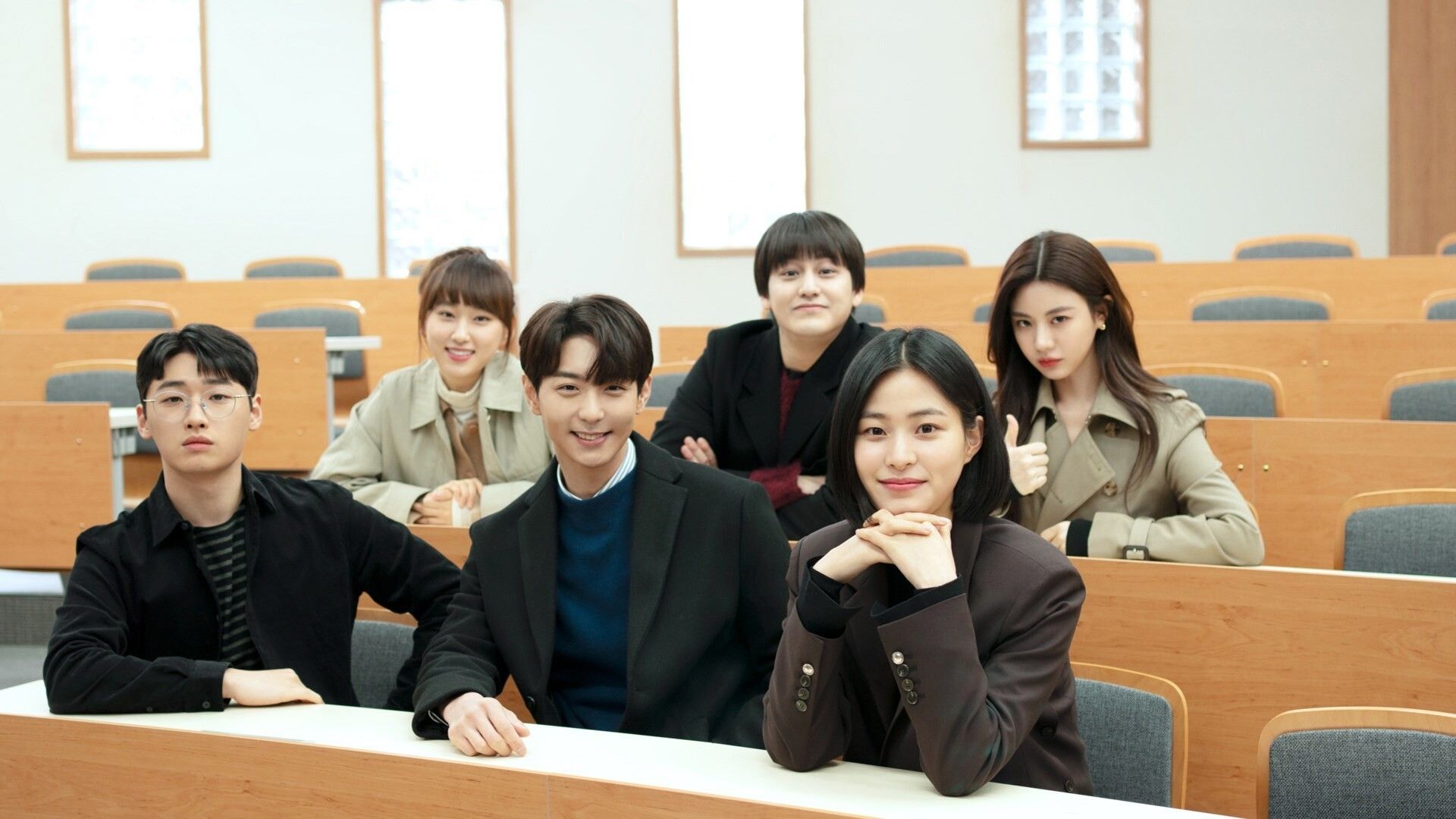

Themes & Symbolism
At its core, Law School isn’t about the law — it’s about the people who hide behind it.
Each case, each ethical dilemma, peels back another layer of hypocrisy in a system that’s supposed to uphold justice.
Justice vs. Law
One of the most striking things the drama exposes is the difference between what’s legal and what’s right. The law, as Yang Jong-hoon reminds his students, is only as moral as the people who enforce it. Through the lens of every student — the privileged, the marginalized, the ambitious — we see how the law can be both a weapon and a shield.
Power & Privilege
Kang Sol B’s storyline examines how power corrupts even the pursuit of justice. Meanwhile, Sol A reminds us that empathy, not pedigree, is what makes a true lawyer. The show’s quiet radicalism lies in its insistence that morality doesn’t belong to the elite — it’s something you earn by standing up, even when you’re trembling.
Academic Pressure & Ethical Decay
In the world of Law School, success is a battlefield. Students compete not only for grades but for moral survival. Every exam is a mirror reflecting who they are — not who they pretend to be.
And beneath all the intellectual bravado lies an uncomfortable truth: sometimes, knowing the law too well can make you forget why it exists.
Visuals & Direction
Unlike most glossy campus dramas, Law School is visually restrained — almost austere.
The camera work is deliberate, mirroring the precision of a legal argument. Cold lighting, muted tones, and the occasional burst of color (usually tied to emotional revelation) create a sense of intellectual isolation.
The courtroom scenes feel tight and airless — a deliberate choice that forces viewers to feel the claustrophobia of moral confrontation. Even the classrooms look like miniature courts, where desks become witness stands and silence becomes testimony.
Kim Seok-yoon’s direction gives every pause, every stare, the weight of a verdict. It’s an atmosphere built not from spectacle, but from stillness.
Soundtrack / OST
There are no soaring ballads here — just restrained, suspenseful instrumentals and long, deliberate silences.
The absence of music often says more than the notes themselves.
When the score does rise, it’s never manipulative — it underlines clarity, revelation, or pain. The theme music carries a faint melancholy, as if justice itself were something forever unfinished.
If you listen closely, even the echo of footsteps in the corridors becomes a kind of rhythm — a reminder that every character is walking the thin line between guilt and innocence.
But amid all that restraint, Law School offers two songs that cut through the silence with startling humanity.
“We Are” by Lee Seung Yoon is a soaring anthem of endurance — a reminder that hope and conviction can still exist within the cold machinery of the law.
And “X” by Safira.K drifts in like a confession — moody, hypnotic, and hauntingly fragile, echoing the show’s themes of doubt and morality.
Together, they turn logic into emotion — the moment when reason finally trembles, and justice starts to sound a lot like heartbreak.
Strengths
- A cerebral masterpiece. Law School dares to be smart. It doesn’t simplify the law — it humanizes it.
- Performances that command attention. Kim Myung-min delivers gravity without theatrics, and Kim Bum redefines quiet charisma.
- Moral complexity. No easy villains, no perfect heroes — just people wrestling with conscience.
- Courageous storytelling. In a landscape of predictable romances, Law School stands tall as a drama that asks uncomfortable questions.
Weaknesses
- Dense legal jargon. Some episodes feel like you’re taking an actual midterm exam in criminal procedure.
- Uneven pacing. The first half crackles with tension, while later episodes meander into too many subplots.
- Limited emotional warmth. If you came here for comfort, you’ll find only cold truths and fluorescent lighting.
Yet somehow, that detachment is the point. Justice isn’t soft. Neither is this show.


Memorable Quotes / Moments
“The law is imperfect justice. So when you teach law, the law must be perfect. And when you study law it must be synonymous with justice, because unjust law is the most cruel thing.”
“A lawyer will do anything to win a case, sometimes he will even tell the truth”.
One of the show’s most unforgettable moments comes not in the courtroom, but in the quiet realization of Kang Sol A — when she finally understands that justice isn’t about memorizing precedents, but about refusing to stay silent.
And then there’s Yang Jong-hoon, standing before his students, asking the question that lingers long after the credits roll:
Yang Jong-hoon
What kind of lawyer do you want to be?
Personal Reflection
Law School isn’t a comfort watch — it’s a confrontation.
It doesn’t soothe you with romance or nostalgia; it demands that you think, question, and re-evaluate the world around you.
Watching it, I found myself scribbling notes like one of the students — except my exam was about humanity.
Every episode forces you to confront how easily truth bends when filtered through ego, fear, and ambition. It’s the kind of drama that leaves your brain buzzing and your moral compass just slightly trembling.
I wouldn’t call it “fun.” But I would call it important.
It’s not about who’s right or wrong. It’s about who dares to stay human in a system that rewards detachment.
And somewhere along the way, amid all the legal jargon and ethical debates, Kim Bum casually became my new crush — because apparently, intelligence and restraint are my weakness.
Yes, Kim Bum… I’m definitely looking at you.

Final Verdict
Law School is not for everyone — and that’s exactly why it matters.
It’s slow, methodical, and unflinchingly honest. But if you stay with it, you’ll find one of the most intellectually satisfying K-dramas of the last decade.
In a sea of comfort stories, Law School stands like a verdict:
Justice isn’t born in the courtroom — it’s born in the choices we make when no one’s watching.



Trailer
Recommendations


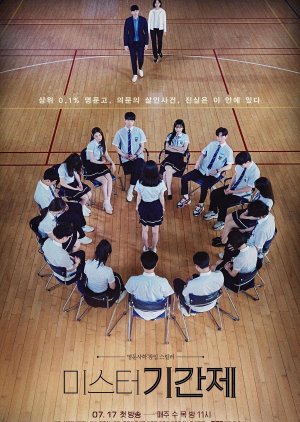


Disclaimer: All images are owned by their respective creators. Used here under fair use for review purposes. Credits to jTBC and associated promotional partners.